










Breaking News
 Will Blue Origin's Vaporized Rocket Set Back Amazon Leo's Satellite Rollout
 Metals Explode Higher as Shorts Capitulate
 He Lived Through One Currency Collapse
 Russia Warns US Against Sending Thousands More Troops Near Its Borders:
Top Tech News
 Cars Are Fast Becoming Dystopian Prison Pods...
 Our Emergency Water Plan Wasn't Good Enough - So We Built This
 Sodium Ion Batteries Can Reach 100 Gigawatt Per Hour Per Year Scale in 2027
 Juiced Bikes proves capable electric motorcycles don't have to cost a lot
 Headlight projectors turn your car into a drive-in theater
 US To Develop Small Modular Nuclear Reactors For Commercial Shipping
 New York Mandates Kill Switch and Surveillance Software in Your 3D Printer ...
 Cameco Sees As Many As 20 AP1000 Nuclear Reactors On The Horizon
 His grandparents had heart disease.
At 11, Laurent Simons decided he wanted to fight aging.
His grandparents had heart disease.
At 11, Laurent Simons decided he wanted to fight aging.
 Mayo Clinic's AI Can Detect Pancreatic Cancer up to 3 Years Before Diagnosis–When Treatment...



Shangri-La Dialogue opens as Asia seeks alternatives to US shield
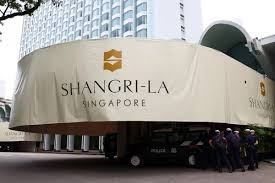
As Asia's premier defense forum opens in Singapore on May 29, the annual Shangri-La Dialogue is morphing from a venue of superpower posturing into a high-stakes market for strategic hedging.
Driven by cascading conflicts in the Middle East, intensifying great-power friction and a corrosive skepticism over the longevity of the US-led security umbrella, Indo-Pacific nations are rewriting their defense playbooks.
Formally organized by the International Institute for Strategic Studies (IISS), the three-day summit has long been the region's premier security clearinghouse. But this year's gathering arrives at a precarious inflection point.
While formal speeches by visiting defense chiefs will command the podium, the true currency of the forum is moving to the hotel corridors and closed-door lounges.
It is here that regional players, increasingly wary of Washington's overextended global commitments, are looking to diversify their security portfolios.
The primary anxiety animating this year's dialogue is whether a distracted Washington can simultaneously underwrite security in Europe, the Middle East and Asia.
The inconclusive fallout from the recent Iran conflict has only sharpened those doubts, leaving both traditional allies and non-aligned states questioning the reliability of American security guarantees.
Speaking to Asia Times, defense analysts point out that this credibility deficit is forcing a fundamental reassessment of traditional alliances.
Jaglul Ahmed, a retired brigadier general and security analyst from Bangladesh, noted that the current global architecture is failing to provide the ironclad reassurance that US allies increasingly demand.
In his view, the strategic fallout from the Middle East will compel both major and minor powers to pivot, pushing the "Indo-Pacific toward a regional approach anchored in strategic autonomy rather than overreliance on a singular superpower."
This calculus is notably shifting European perspectives as well. According to Ahmed, European delegates at Shangri-La are likely to hedge their bets, viewing China with an eye toward securing maritime commerce given Beijing's significant diplomatic leverage over Tehran.
For secondary powers, the objective is no longer choosing a side, but managing exposure.
Nitin Gokhle, editor of the Indian defense portal Bharatshakti.in, told Asia Times that this year's iteration will be defined by countries protecting their positions in an increasingly volatile climate.
With top-level ministerial gaps from giants like India and China, Gokhle expects the US to "dominate the public stage," yet he emphasizes that the critical matchmaking will occur out of camera range.