










Breaking News
 Will Blue Origin's Vaporized Rocket Set Back Amazon Leo's Satellite Rollout
 Metals Explode Higher as Shorts Capitulate
 He Lived Through One Currency Collapse
 Russia Warns US Against Sending Thousands More Troops Near Its Borders:
Top Tech News
 Cars Are Fast Becoming Dystopian Prison Pods...
 Our Emergency Water Plan Wasn't Good Enough - So We Built This
 Sodium Ion Batteries Can Reach 100 Gigawatt Per Hour Per Year Scale in 2027
 Juiced Bikes proves capable electric motorcycles don't have to cost a lot
 Headlight projectors turn your car into a drive-in theater
 US To Develop Small Modular Nuclear Reactors For Commercial Shipping
 New York Mandates Kill Switch and Surveillance Software in Your 3D Printer ...
 Cameco Sees As Many As 20 AP1000 Nuclear Reactors On The Horizon
 His grandparents had heart disease.
At 11, Laurent Simons decided he wanted to fight aging.
His grandparents had heart disease.
At 11, Laurent Simons decided he wanted to fight aging.
 Mayo Clinic's AI Can Detect Pancreatic Cancer up to 3 Years Before Diagnosis–When Treatment...



"Approaching Unheard Of Inventory Levels":
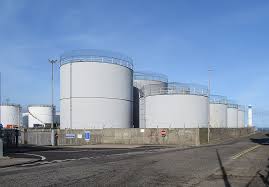
Just about two months ago, JPMorgan did the math on "How Long Before The World Hits Crude Oil Operational Minimum." The punchline was that while the market can hold hundreds of millions of barrels, it would still become fragile once working stocks fell too low. Like blood pressure in the human body, the issue is circulation.

Then, approximately 4 weeks later, the bank followed up this analysis with some more math, explaining "Why Hormuz Will Reopen By September… One Way Or Another." The bank calculated that of the 8.4 billion barrels in global oil inventories at the start of 2026, only 0.8 billion barrels were realistically available without pushing the system into operational stress. Long story short (and the long story can be found here), OECD commercial stocks could fall to operational stress levels by June, and then hit the global operational floor by September if the Strait of Hormuz remains closed, assuming demand destruction stabilized at 5.5 mbd (with oil prices paradoxically dropping since the last JPM article, demand destruction has actually slowed).

Meanwhile, the biggest paradox during this period when the blocked Hormuz Strait meant that roughly 10 million barrels of oil wasn't reaching its intended destination each day, was that instead of prices going sharply higher to destroy demand, oil prices were actually dropping after peaking in late March and then again a month later, in effect incentivizing more demand. This prompted JPMorgan to published that "Something Is Off" With The Global Oil Math…
