










Breaking News
 Trump's Approval Among Voters Has Stabilized, But Is That Enough To Boost GOP In Midterms?
 Courts Just Ruled the Gospel "Psychologically Harmful" -- and Pastors Are Being Told to Sh
 In a massive win, HHS Sec. Bobby Kennedy is moving to FORCE Big Healthcare to disclose...
 It Took 211 Years to Borrow $2.3 Trillion. Congress Just Did It in Twelve Months.
Top Tech News
 Seven apps. One craft
 SHOCK CASE REPORT: Advanced Alzheimer's Patient Regains Speech, Memory, Mobility...
 Most artificial limbs rely on silicone or plastic to mimic human hands.
 Flying cell tower beams phone signal to Japan from 10 miles up
 Chinese Commercial Reactor Achieves Nuclear Fusion with Clean Hydrogen-Boron Fuel
 Med Beds Just Took a MASSIVE Step Forward, Healing People in Days!
 Palmer Luckey: Autonomous Weapons Are Ancient and Why Anduril Won't Build Humanoids | EP #295
 A laser just photographed objects through six feet of concrete
 Elon Musk's Next-Gen Motor Destroy Entire EV Industry
 China's disputed satellite refueling heralds new space war era



Widely Used 'Chemical Cocktails' Tied to Gut Damage, Inflammation
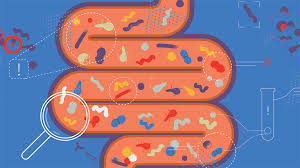
Researchers say the findings raise urgent questions about how pesticide safety is evaluated, since regulators typically assess chemicals individually rather than as the "chemical cocktails" people encounter in the real world.
Herbicide mixtures widely used on industrial farms may damage the gut, disrupt healthy bacteria and trigger inflammation at exposure levels regulators currently consider safe, according to a new peer-reviewed study.
The research, published in April in Archives of Toxicology, examined glyphosate — the active ingredient in Roundup weedkiller — alongside two other common herbicides, dicamba and 2,4-D. Rats exposed to the chemical combinations developed intestinal inflammation, tissue damage, oxidative stress and signs of "leaky gut."
The findings raise concerns about how the safety of agrochemicals is typically evaluated — because regulators generally assess chemicals one at a time rather than in the combinations people and wildlife are actually exposed to in the environment.
"This study comprises the most comprehensive investigation of the impact of glyphosate on gut structure and function," the authors wrote. The study is also the first to examine the combined effects of glyphosate with dicamba and 2,4-D at "regulatory relevant" doses deemed to be safe, the authors said.
"The findings show that the levels of these herbicides, when ingested as a mixture, have adverse effects and are not safe at all – and that regulatory assurances of safety are false," according to GMWatch, which reported on the study.
The study, led by glyphosate expert Michael Antoniou, Ph.D., comes amid escalating concerns about chronic exposure to agricultural chemicals, particularly in communities near large-scale farming operations.
Glyphosate, the key active ingredient in Roundup, has long been controversial because it may cause cancer.
But scientists are increasingly focusing on more subtle biological disruptions — especially impacts on the gut microbiome, inflammation and metabolic health.
Antoniou told GMWatch that the results of the study show that such effects must be included in regulatory safety studies.
It also shows that "chemical pollutants need to be evaluated for toxicity as mixtures and not only as individual agents, as is currently practised by regulators in all nations."
Herbicide mixtures triggered gut inflammation, tissue damage at 'safe' levels
In the new study, the researchers exposed rats to glyphosate alone and to glyphosate combined with dicamba and 2,4-D — two herbicides commonly paired with glyphosate for use on genetically engineered crops designed to withstand multiple weedkillers.
The doses they used mirrored levels regulators in Europe "deemed to be safe" for daily exposure. They studied exposure beginning prenatally.
Animals exposed to the herbicide mixtures showed chronic inflammation in the intestine, vascular congestion, tissue abnormalities and structural changes in the small and large intestines — important regions of the digestive tract.
The animals also exhibited signs of increased intestinal permeability, which is often called "leaky gut," a condition linked to inflammatory and autoimmune disorders.