










Breaking News
 Iran War Effect Marks the Resetting of World Geo-politics
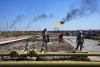 Oil 'powder keg': Trump says Hormuz blockade may last all summer
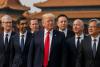 Xi closes the door after promising US CEOs to open wider
 THEY WON
Top Tech News
 Elon and SpaceX Have Made AI Training 10 Times Faster
 Oklo COO Says Nuclear Waste Could Power America For 150 Years
 SpaceX Announces LARGEST Starship Mission Ever! They've never done this before!
 Cars Are Fast Becoming Dystopian Prison Pods...
 Our Emergency Water Plan Wasn't Good Enough - So We Built This
 Sodium Ion Batteries Can Reach 100 Gigawatt Per Hour Per Year Scale in 2027
 Juiced Bikes proves capable electric motorcycles don't have to cost a lot
 Headlight projectors turn your car into a drive-in theater
 US To Develop Small Modular Nuclear Reactors For Commercial Shipping
 New York Mandates Kill Switch and Surveillance Software in Your 3D Printer ...



China's New Flying Wing H-20 Strategic Stealth Bomber Summed Up in 4 Words
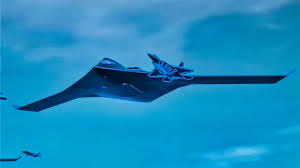
The aircraft on display there is the only public B-2 anywhere in the world, a stealth bomber so far ahead of its time that the United States can afford to retire one example to a museum exhibit while a fleet of operational Spirits still flies. That is the backdrop against which China's H-20 has to be measured. Beijing first acknowledged it was building a stealth bomber to rival the B-2 back in 2016, and a full decade later, no one outside a handful of Chinese facilities has confirmed seeing the thing fly. The United States has stealth bombers to spare.
China cannot field even one.
H-20 Stealth Bomber: A Decade Of "Coming Soon"
The H-20's defining feature, after ten years, is the gap between what has been promised about it and what has actually appeared.
The program emerged into public view around 2016 as China's bid to build a long-range flying-wing bomber, the missing leg of a true strategic triad, and a rough analog to the American B-2.
Since then, it has become one of the most reliably anticipated aircraft in the world, repeatedly described as nearly ready and repeatedly failing to materialize.
The pattern of missed debuts is by now almost comic in its consistency. The development of a next-generation stealth bomber was first acknowledged in 2016, but no official first-flight or entry-into-service date has ever been set.
A widely expected unveiling tied to the People's Republic's 70th-anniversary celebrations in 2019 came and went with nothing. Reports in Chinese state-controlled media in 2022 suggested the aircraft was close to its maiden flight, and again no confirmation followed. In 2024, a senior PLAAF officer offered yet another prediction that the bomber would appear coming "very soon," a forecast that quietly faded like the ones before it. Each cycle followed the same arc: a burst of optimistic signaling, a flurry of speculation, and then silence.
What makes the silence conspicuous is its timing. The official Chinese messaging that the H-20 was imminent had been a recurring feature of the late 2010s, but that drumbeat largely subsided over the past year or so, even as China rolled out a stream of other high-profile aviation programs.
A country that has been eager to show off new fighters, drones, and naval hardware has gone quiet on the one platform it once trumpeted, and, in this context, quiet tends to signal trouble rather than triumph.