










Breaking News
 Iran War Effect Marks the Resetting of World Geo-politics
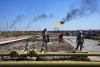 Oil 'powder keg': Trump says Hormuz blockade may last all summer
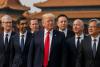 Xi closes the door after promising US CEOs to open wider
 THEY WON
Top Tech News
 Elon and SpaceX Have Made AI Training 10 Times Faster
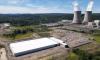 Oklo COO Says Nuclear Waste Could Power America For 150 Years
 SpaceX Announces LARGEST Starship Mission Ever! They've never done this before!
 Cars Are Fast Becoming Dystopian Prison Pods...
 Our Emergency Water Plan Wasn't Good Enough - So We Built This
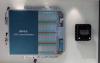 Sodium Ion Batteries Can Reach 100 Gigawatt Per Hour Per Year Scale in 2027
 Juiced Bikes proves capable electric motorcycles don't have to cost a lot
 Headlight projectors turn your car into a drive-in theater
 US To Develop Small Modular Nuclear Reactors For Commercial Shipping
 New York Mandates Kill Switch and Surveillance Software in Your 3D Printer ...



Xi closes the door after promising US CEOs to open wider
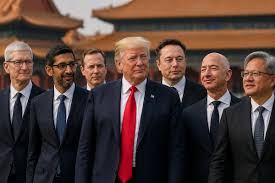
The billionaire CEOs who accompanied US President Donald Trump to Beijing last month are probably feeling some whiplash.
Some of that disorientation comes from Trump himself — a president who built two campaigns on confronting China and has since recast himself as an open admirer of Xi Jinping, lurching between hard and soft postures with little warning.
But the sharper sting is how quickly Xi's promises have curdled. His assurances to Trump's business entourage — that China would "open wider" and offer American firms "broader prospects" — already sound like dispatches from a different era. What was meant to inspire Apple's Tim Cook, Tesla's Elon Musk, Nvidia's Jensen Huang and the other US corporate titans now looks like a head fake.
The reality is China is now imposing tighter controls on cross-border capital, a walled-off AI sector and shrinking transparency. That is, less openness, not more, as Xi promised his American guests.
No wonder China's markets are being left in the dust. The CSI 300 is up just 7% this year, compared with a 108% surge in South Korea, 57% in Taiwan and 33% in Japan — even amid energy disruptions from the war in Iran.
It's far from clear that Xi's decision to restrict the overseas travel of China's AI experts will help the country tap into the global tech rally now underway. The optics are especially poor: Beijing is effectively putting its AI talent on a leash, echoing the Soviet?era practice of keeping academics, athletes and artists from straying abroad.
For the billionaire cohort that accompanied US President Donald Trump to Beijing, it's a deflating turn. Many returned hoping that AI cooperation might be one tangible economic win from the Xi–Trump summit.
As longtime China watcher Bill Bishop notes, the "burst of positive energy among analysts following May's Xi–Trump summit cooled somewhat towards the end of the month."
Coming out of Beijing, Bishop writes, Chinese Consul General in New York Huang Ping cast the moment as "a narrow strategic window for China to engage different US interest groups and secure a place in global AI governance and high?value industrial ecosystems."
Team Xi now appears intent on building a new Great Wall around China's AI sector. At the same time, Beijing is making it harder for retail investors to buy US stocks — accelerating a broader shift toward tighter controls on where domestic capital can and cannot go. As Vey?Sern Ling of Union Bancaire Privée notes, this "may potentially reduce funds to ADRs listed in the US."
The deeper issue is the message these moves send. The crackdown is "far tougher and more systematic" than previous efforts, argues Dan Wang, head of China analysis at Eurasia Group.