










Breaking News
 Trump's Approval Among Voters Has Stabilized, But Is That Enough To Boost GOP In Midterms?
 Courts Just Ruled the Gospel "Psychologically Harmful" -- and Pastors Are Being Told to Sh
 In a massive win, HHS Sec. Bobby Kennedy is moving to FORCE Big Healthcare to disclose...
 It Took 211 Years to Borrow $2.3 Trillion. Congress Just Did It in Twelve Months.
Top Tech News
 Seven apps. One craft
 SHOCK CASE REPORT: Advanced Alzheimer's Patient Regains Speech, Memory, Mobility...
 Most artificial limbs rely on silicone or plastic to mimic human hands.
 Flying cell tower beams phone signal to Japan from 10 miles up
 Chinese Commercial Reactor Achieves Nuclear Fusion with Clean Hydrogen-Boron Fuel
 Med Beds Just Took a MASSIVE Step Forward, Healing People in Days!
 Palmer Luckey: Autonomous Weapons Are Ancient and Why Anduril Won't Build Humanoids | EP #295
 A laser just photographed objects through six feet of concrete
 Elon Musk's Next-Gen Motor Destroy Entire EV Industry
 China's disputed satellite refueling heralds new space war era



New trigger for Alzheimer's disease may have been found
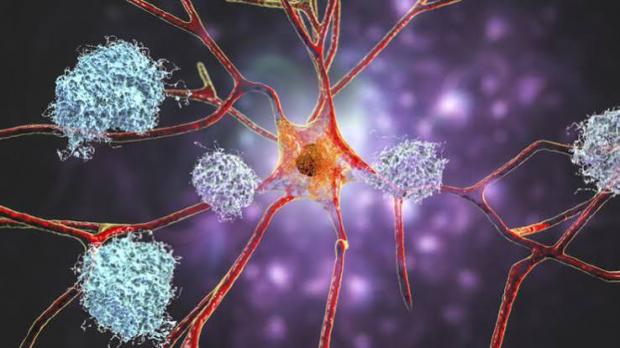
Researchers at the University of California, Riverside (UCR) say the earliest changes could instead happen inside nerve cells, where two key proteins appear to interfere with each other.
For years, much of the focus has been on amyloid beta, or a-beta, because it forms clumps in the brains of people with Alzheimer's. That link appeared well supported, especially since genetic mutations that increase a-beta levels are known to cause early-onset forms of the disease.
But attempts to treat Alzheimer's by removing these clumps have been largely unsuccessful, with thousands of trials failing to stop or reverse its progression.
Michael Kane, chief medical officer at Indiana Center for Recovery, told Newsweek that the findings of this study should not be seen as dismissing the amyloid theory entirely, but rather as refining it.
"I see these findings less as a rejection of the amyloid theory and more as a possible link between amyloid beta and tau," he said.