










Breaking News
 Celebrate Your Individual Independence on Independence Day
 Russia Unleashes Strikes on Kyiv in Deadly 11-Hour Barrage
 90,000 Haitians live in Massachusetts and only 10,000 are working…
 Dow Jones Industrial Average
Top Tech News
 Our Diesel-Electric Truck Is So Quiet the Military Wants One
 World's first hotel entirely staffed by robots to open in 2027
 Researchers in China are ignoring bug spray, citronella, and netting.
 Our bodies may be able to regrow lost limbs after all
 Chinese cars go blacker than black via hybrid nano tech
 World first: Human embryo model grows its own organs – in the lab
 Dead lithium batteries revived to 95% capacity via electrochemical bath
 Compact laser engraver levels up your DIY crafts setup
 'Groundbreaking' Potential Lupus Cure Sends Patients into Remission, Allowing Dreams...
 SpaceX Orbital Travel and Orbital Hotels Need Starfall – Getting Back Safe and Cheap is Exciting



'Something Has Gone Completely Wrong': Palantir's Alex Karp Goes Ballistic On OpenAI, An
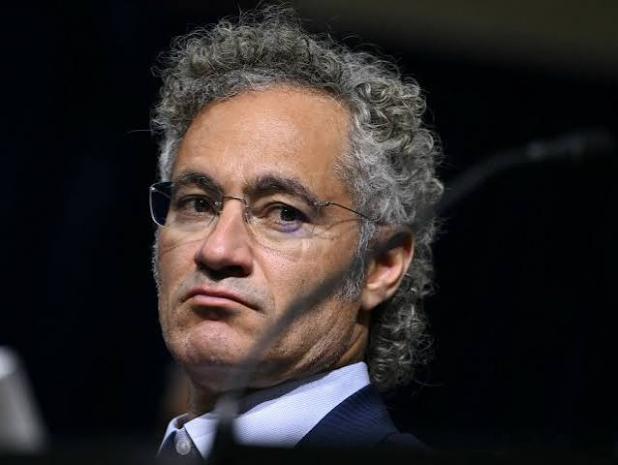
He said that top AI labs such as Anthropic and OpenAI were misleading corporate partners - "overselling" the risks of AI while at the same time offering their most powerful models to companies and governments worldwide.
When CNBC host Becky Quick said "You sound pretty angry," Karp replied: "This is the voice of American business that is being channeled through me," he told CNBC, joking later that he might "get kicked out of the room."
Karp's comments come amid a "revolt" against U.S. AI labs - driven by a combination of high costs, questionable ROI, and increasing regulatory headwinds which have driven some major U.S. companies to cheaper Chinese alternatives, creating multiple pressure points for OpenAI, Anthropic, and others.
"Something Has Gone Completely Wrong"
Karp slammed the token model used by Anthropic and OpenAI - saying "I'm not throwing shade at them, but something has gone completely wrong," he said. "The basic view among enterprises in this country is I'm going to chillax and waste my time with tokens."
He argued that that labs were overselling risks while simultaneously pushing powerful models, and that companies were effectively paying a "wealth tax" that transferred their "alpha" (competitive advantage) to third parties. On national security, he warned: "Are we really going to outsource the battlefield of this country to the consensus view in Silicon Valley? That is effing insane."
The remarks aligned with a 9-point "AI sovereignty" manifesto Palantir posted on X the day before, which criticized "tokenmaxxing" for incentivizing disposable scripts over robust systems and urged institutions to retain control over their data, model weights, and competitive edge.
Via X:
Our thoughts on the importance of AI sovereignty.
1. Your AI sovereignty dictates your institution's future. Sovereignty is the precondition for choice. Relinquishing sovereignty transfers the future choices of your institution to others, who are likely to exploit it for their gain and your loss.
2. Data retention is your treasure. Transfer it at your own peril. Your ability to win is dictated by your ability to recognize and use your unique edges, and you keep winning by compounding the underlying data to generate new insights. Transferring that data hands over access to your pre-existing winning plays and yields the means of production for new ones.
3. Tokenmaxxing hijacks your value orientation and decreases your institutional fortitude and intelligence. The pursuit of high token usage incentivizes disposable scripts over robust software — with the addictive feeling of false progress. There is a reason why those selling tokens refuse to charge based on value.
4. Controlling your weights is controlling your fate. Weights are the distilled form of hard-won, accumulated institutional knowledge. If you let others control your weights, you are allowing them to migrate the alpha of your business to theirs.