










Breaking News
 John Bolton Pleads Guilty To Retaining National Security Information
 Can Two Hours Of School Really Be Enough? | MacKenzie Price #491 | The Way I Heard It
 Tucker Carlson: "This World Is Not Run By Humans!" Trump Has Supernatural Powers
 How They're Building an Off-Grid Community in the Private Realm (Trust + PMA + Ministry)
Top Tech News
 'Groundbreaking' Potential Lupus Cure Sends Patients into Remission, Allowing Dreams...
 Speculations on What Could Show Physics Beyond the Standard Model
 SpaceX Orbital Travel and Orbital Hotels Need Starfall – Getting Back Safe and Cheap is Exciting
 Lizard-inspired wiggly wheels let Mars rover swim through sand
 Fact Sheet: President Donald J. Trump Ushers in the Next Frontier of Quantum Innovation
 Researchers at Johns Hopkins University just let an AI-guided robot remove a dead pig's gallblad
 World's first consumer wing-in-ground effect aircraft takes flight
 America's Military Readiness Depends On Deployable Nuclear Power
 License Plate Cameras Are About To Start Tracking A Lot More Than Just Your Car
 Heads up: Apparently the government is hiding cameras inside fake utility boxes



Dead lithium batteries revived to 95% capacity via electrochemical bath
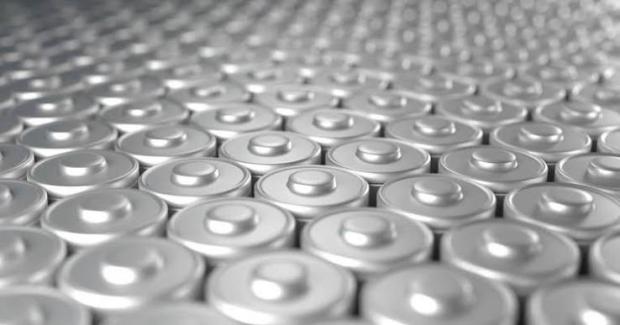
Unlike conventional battery recycling methods that involve the complete physical destruction of batteries, followed by complex, energy-intensive recovery processes to extract critical battery-making materials, the scientists' method recycles lithium-ion battery electrodes directly. Rather than breaking down structurally intact electrodes to extract materials that will make other electrodes, their approach regenerates the existing electrodes using an electrochemical solution.
The researchers say this method restored batteries to 95% of their original capacity, and even helped recycled batteries last longer. According to them, the method could also slash recycling costs by 56% while being more environmentally friendly.
As lithium-ion batteries age, a layer called the solid electrolyte interphase (SEI) gradually grows on the electrodes. A thin SEI layer is actually necessary for battery operation. However, over hundreds or thousands of charge cycles, it becomes thicker and thicker, increasing resistance and reducing battery capacity. This phenomenon is one of the foremost drivers of battery wearout, leading to EV batteries and stationary electricity storage systems being retired with much of their structure still intact. This structure includes the now-coated electrodes, which contain critical minerals such as lithium, nickel, cobalt, manganese, copper, and aluminum.