










Breaking News
 Win a Pound of Physical Gold Raffle
 Technocrat Zillionaires Are Starting To Get Scared As The Public Turns Against Them
 Data Centers Draining the Grid, Flock Surveillance & "You Will Own Nothing" Patrick Wood
 It's Time To Stop Pretending That Migrants Are Entitled To Equal Citizenship
Top Tech News
 Researchers in China are ignoring bug spray, citronella, and netting.
 Our bodies may be able to regrow lost limbs after all
 Chinese cars go blacker than black via hybrid nano tech
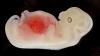 World first: Human embryo model grows its own organs – in the lab
 Dead lithium batteries revived to 95% capacity via electrochemical bath
 Compact laser engraver levels up your DIY crafts setup
 'Groundbreaking' Potential Lupus Cure Sends Patients into Remission, Allowing Dreams...
 Speculations on What Could Show Physics Beyond the Standard Model
 SpaceX Orbital Travel and Orbital Hotels Need Starfall – Getting Back Safe and Cheap is Exciting
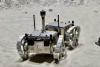 Lizard-inspired wiggly wheels let Mars rover swim through sand



World first: Human embryo model grows its own organs – in the lab
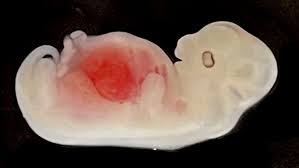
It may sound like science fiction, but researchers have spent years trying to solve this puzzle; stem cells are challenging to control in the complex way needed for artificial organ development, which has been just one of the many obstacles facing this biotechnology.
Apart from the science, one of the hurdles has, of course, been ethical. There are international guidelines that block the culturing of human embryos beyond 14 days post-fertilization – when gastrulation takes place.
Gastrulation is an early but crucial development stage in mammals (and other animals), when an embryo transforms from a one-dimensional layer of epithelial cells into a multilayered, multidimensional form known as the gastrula. The result is a three-layered organism composed of endoderm, mesoderm and ectoderm tissue.
"Gastrulation is when the body's basic architecture is established, transforming the embryo from a flat disc into a three-dimensional structure," says Yu Leqian, corresponding author of the study and a professor at the Institute of Zoology, Chinese Academy of Sciences.
Essentially, this transition marks the point where our cells are set up with the precursors required for organ formation, one of the most critical events in human development.
Because of this, lab-grown embryo-styled models are the only way we can study this developmental window, which takes place between 14 and 21 days. But until now, embryo models have not been able to replicate nature. There's a reason gastrulation is constantly referred to as the "black box" of embryology.
Yu adds that previous human embryo models only generated certain cell types and also failed to produce the "primitive streak" – a groove that facilitates the pathway to this developmental stage. Because of this, cells develop randomly and uncontrollably, deviating from anything that mirrors human development.
While not the same, the difficulty in directing lab-cultivated pluripotent cells to order themselves like nature has also been a challenge in neuroscience research and our efforts to properly unpack the brain's function.