










Breaking News
 The Declaration of Independence Versus America's Immigration Police State
 There's No Plan To Pay The $40 Trillion Debt -- The Plan Is To Steal It From Your Savings
 What Happens to Your Money on Reset Day?
 Episode 483: AARON SIRI AT THE KENNEDY CENTER: A Turning Point for Informed Consent
Top Tech News
 Our Diesel-Electric Truck Is So Quiet the Military Wants One
 World's first hotel entirely staffed by robots to open in 2027
 Researchers in China are ignoring bug spray, citronella, and netting.
 Our bodies may be able to regrow lost limbs after all
 Chinese cars go blacker than black via hybrid nano tech
 World first: Human embryo model grows its own organs – in the lab
 Dead lithium batteries revived to 95% capacity via electrochemical bath
 Compact laser engraver levels up your DIY crafts setup
 'Groundbreaking' Potential Lupus Cure Sends Patients into Remission, Allowing Dreams...
 SpaceX Orbital Travel and Orbital Hotels Need Starfall – Getting Back Safe and Cheap is Exciting



New Solar Tech Makes Desalinating Seawater Cheaper Than Producing Bottled Water
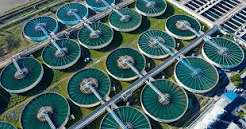
By creating a weave of nanomaterials and organic polymers which were both durable and highly reflective, they created a device that could absorb 90.2% of incoming sunlight and use it to evaporate water with 47.5% less energy.
After it generated 5 gallons of fresh water every day for a year of testing, the scientists say that at scale it would be cheaper than producing bottled water.
It wasn't a coincidence that after seawater desalination plants were threatened with destruction during the recent war in the Persian Gulf, virtually all belligerents came to the negotiating table.
The some-400 desalination plants located along the Gulf's shoreline represent most of the world's R&D into the technology, which for decades has been stuck with an energy-intensive process known as membrane or reverse osmosis desalination.
Engineering teams around the world have been attempting to develop new methods of seawater desalination to improve drinking water economies around the world's arid regions; GNN has reported on several.
This new method, pioneered from a team from Beijing-based Institute of Process Engineering (IPE) at the Chinese Academy of Sciences and Shenzhen University, was used in a test to irrigate 50-square feet of vegetables year round.
Membrane desalination forces seawater through a thin membrane that catches the salt particles. It sounds simple, but other steps drive the energy use up to the point that only energy-rich countries like Saudi Arabia can afford to base their entire water supplies around it.
Solar-powered evaporation is another potential method—the one used by the Chinese scientists—but it had been plagued with materials failures. Ultrafine solar-absorbing powders clumped like flour; organic polymers cracked like cheap plastic.
Drawing inspiration from a shirt button, the Chinese scientists constructed nanoparticle spheres that could be threaded together with polymer like yarn pulled through the holes in a button. The resulting structure consisted of billions of these microspheres, and proved extremely robust and durable, even in conditions that simulated a squally coastline.