










Breaking News
 The Largest American Flag Ever Towed
 Watch: Shocking Footage Of Britain's Two-Tier Policing
 They finally got him...
 FBI Mole Wore Wire Inside Newsom's Inner Circle: Lawyer
Top Tech News
 Our Diesel-Electric Truck Is So Quiet the Military Wants One
 World's first hotel entirely staffed by robots to open in 2027
 Researchers in China are ignoring bug spray, citronella, and netting.
 Our bodies may be able to regrow lost limbs after all
 Chinese cars go blacker than black via hybrid nano tech
 World first: Human embryo model grows its own organs – in the lab
 Dead lithium batteries revived to 95% capacity via electrochemical bath
 Compact laser engraver levels up your DIY crafts setup
 'Groundbreaking' Potential Lupus Cure Sends Patients into Remission, Allowing Dreams...
 SpaceX Orbital Travel and Orbital Hotels Need Starfall – Getting Back Safe and Cheap is Exciting



5 cities, 6 days and millions of mourners: Inside Iran's funeral plans for Ayatollah Ali Khamene
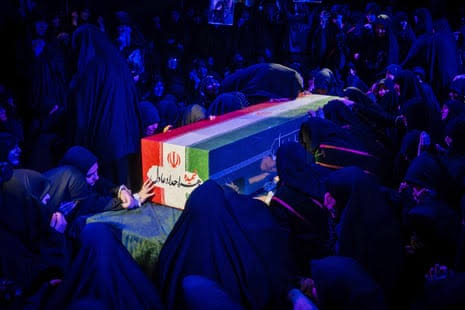
Khamenei, who for 37 years held ultimate authority in all key state matters, was killed at the age of 86 in February in missile strikes carried out by the US and Israel on his residential and working compound in central Tehran.
And starting today (Friday) until July 9, Tehran has planned ceremonies in at least five cities across Iran and Iraq for his final farewell. Notably, Khamenei's burial was initially scheduled for March, but postponed as the US and Israeli war with Iran dragged on.
Acting Tehran Mayor Alireza Zakani has said that the ceremonies for the former supreme leader would be "the largest assembly in the history of the capital," while other officials note that the funeral could draw up to 20 million mourners from across Iran.
Why has it taken so long for Iran to hold Khamenei's funeral?
Iran's former Supreme Leader Ayatollah Ali Khamenei, who ruled Iran from 1989, was killed in the US-Israeli strikes at the beginning of the war on February 28.
Initially, the Islamic Republic planned to bury its leader in March. However, as the war between the US and Israel against Iran continued, authorities decided to defer the funeral for their supreme leader. Officials noted repeatedly that the delay was due to severe, volatile conditions of the active war with the United States and Israel.
The delay in laying Khamenei to rest also fuelled speculation about how his remains have been preserved for so long. While there was some speculation that Khamenei's body was temporarily buried, Iranian officials have maintained that his body was kept in accordance with religious requirements.
Counterterrorism expert Dr Omar Mohammed told Fox News Digital that the Ayatollah's remains were "almost certainly refrigerated cold storage, not embalming, as Islam bars chemical embalming". "Shia law allows delayed burial and preservation by cold in exceptional cases, and a clerical exemption for a supreme leader is easy to get," he added.