










Breaking News
 Tampa Bay Rays seal World Series showdown with the Milwaukee Brewers after ALCS win...
 WNBA stars defy fan fury and walk off the court before the national anthem AGAIN ahead...
 Zemmour: French Riots Show "True Face Of The Great Replacement"
 Housing Starts Collapse Near COVID Lows As Homebuilder Confidence Crashes
Top Tech News
 Bioinspired robot airdrops into remote waters via morphing wing-sail
 Anduril interceptor adapts to emerging threats via swappable stages
 I Built a Website to Expose Solar and Battery Scams
 Whistleblower Issues Dire Warning: Rogue AI, Hacking Nuclear Programs...
 Multi-material insulation delivers up to 10,000 x the stiffness
 Anduril's plan to save US sub edge from China's undersea surge
 Researchers Develop AI 'Mind-Reading' Tool That Reconstructs What Your Eyes See
 Video: Dexterous robot hand learns the delicate art of silk embroidery
 The computer that can read your mind:
  Seven apps. One craft


How to Make Homemade Artisanal Jam Without Pectin
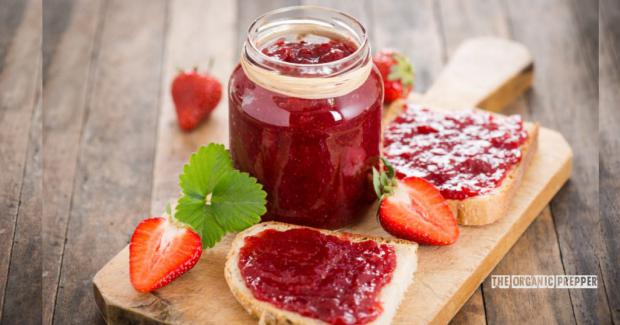
Why You Might Want to Make Your Jam WITHOUT Pectin
As the name of this website implies, we like to keep things nourishing and natural. A while back, I spent some time reading up on store-bought pectin and I was very unhappy to discover the jams I had been making for my family have been tainted with GMOs. I had unknowingly been contaminating the carefully sourced fruit and pricey turbinado sugar with the very things I strive to avoid, and I hadn't even given it a second thought.
Most brands exclaim breathlessly, "All natural pectin" or "Made from real fruit". And this is true – it does originate from fruit. Sound okay, right? Don't be deceived. This misleading label makes it sound as though this is nothing more than some powdered fruit.
Storebought pectin contains additives that are most likely genetically modified. Dextrose is generally made from corn products (GMOs that are absolutely SOAKED in glyphosate). It is made from cornstarch, the main ingredient in good old High Fructose Corn Syrup.
Don't let anyone tell you that citric acid is "just Vitamin C". It is derived from GMO black mold.
Not only does store-bought pectin contain unsavory ingredients, but it is also very highly processed. According to Wikipedia, this is how it is produced:
The main raw materials for pectin production are dried citrus peel or apple pomace, both by-products of juice production. Pomace from sugar beet is also used to a small extent.
From these materials, pectin is extracted by adding hot dilute acid at pH-values from 1.5 – 3.5. During several hours of extraction, the protopectin loses some of its branching and chain length and goes into solution. After filtering, the extract is concentrated in vacuum and the pectin then precipitated by adding ethanol or isopropanol. An old technique of precipitating pectin with aluminium salts is no longer used (apart from alcohols and polyvalent cations, pectin also precipitates with proteins and detergents).