










Breaking News
 Trump's Approval Among Voters Has Stabilized, But Is That Enough To Boost GOP In Midterms?
 Courts Just Ruled the Gospel "Psychologically Harmful" -- and Pastors Are Being Told to Sh
 In a massive win, HHS Sec. Bobby Kennedy is moving to FORCE Big Healthcare to disclose...
 It Took 211 Years to Borrow $2.3 Trillion. Congress Just Did It in Twelve Months.
Top Tech News
 Seven apps. One craft
 SHOCK CASE REPORT: Advanced Alzheimer's Patient Regains Speech, Memory, Mobility...
 Most artificial limbs rely on silicone or plastic to mimic human hands.
 Flying cell tower beams phone signal to Japan from 10 miles up
 Chinese Commercial Reactor Achieves Nuclear Fusion with Clean Hydrogen-Boron Fuel
 Med Beds Just Took a MASSIVE Step Forward, Healing People in Days!
 Palmer Luckey: Autonomous Weapons Are Ancient and Why Anduril Won't Build Humanoids | EP #295
 A laser just photographed objects through six feet of concrete
 Elon Musk's Next-Gen Motor Destroy Entire EV Industry
 China's disputed satellite refueling heralds new space war era



Single Pouch of Gerber Baby Food Contains About 5,000 Microplastic Particles
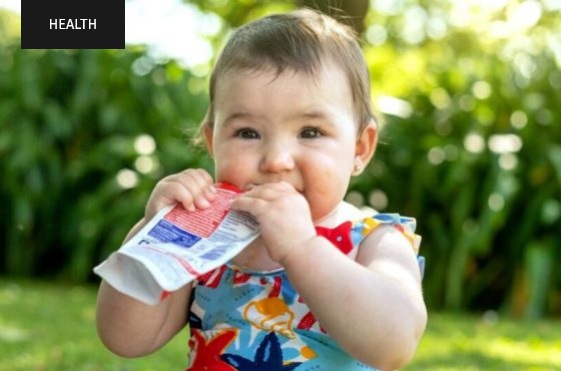
Many of us think of plastic as a simple, single material. It is not. It is made from more than 16,000 chemicals, including 4,200 known to harm human health. Babies are uniquely vulnerable to these chemicals. Their organs and nervous systems are developing rapidly. Even small exposures to certain chemicals can have lifelong effects on growth, metabolism and reproductive systems.
As new parents, we cherish the fleeting firsts: the first laugh, the first unsteady steps and the first foods at family dinners. We research, we plan and we try to give our babies the healthiest start possible. And in the swirl of advice from every direction, we often lean on what feels familiar and trusted.
For generations, store-bought baby food provided some of the earliest meals for babies across the country. The distinctive, petite glass jars have long symbolized the kind of wholesome, uncomplicated nourishment many parents reach for when they want something healthy and reliable.
Over time, many of these glass jars were replaced with plastic pouches — but plastic food containers have given us something new to consider.