










Breaking News
 What You Can Do to Repel Mosquitoes (And Why They Bite Some of Us More Than Others)
 Elon Musk to Unleash His Political War Chest to Help Republicans Win the Midterms
 Investors are worried about Oracle's credit
 $45B hedge fund collapses after margin calls
Top Tech News
 Idaho's High Desert Becomes Hot Spot For Nuclear Power Revolution
 The World's Largest Electric Aircraft Is About to Take Its First Flight
 Tesla Cybercabs and Superchargers Will Act as Mini Cell Towers for SpaceX Starlink
 Elon Vows AI-Made 'Odyssey' After Blasting Nolan's Take On Homer
 Anthropic is launching its own drug discovery programs for rare diseases using Claude...
 SpaceX AI Satellites Will Have 250 Kilowatts of Power
 Chinese researchers have developed a sodium-metal battery that can fully charge in just 4 minutes...
 SpaceX Starship Flight 13 in 3 Days - Thursday July 13
 Chinese Scientists Develop Nuclear Battery Using Carbon-14
 Teleoperated humanoid robots complete first-ever live surgery



They risk control over the entire chain | The $500M BEEF GIANT Loophole
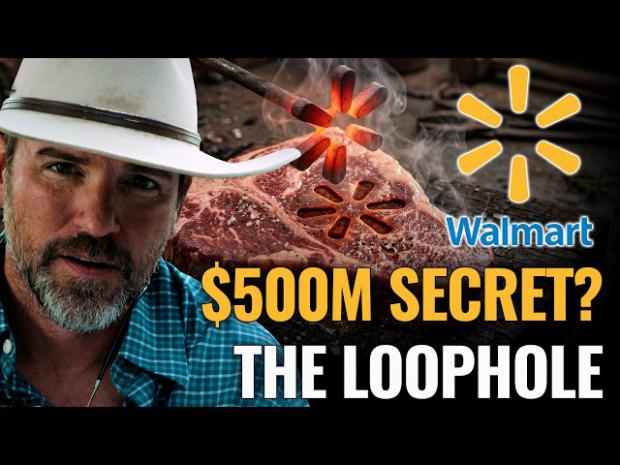
Is your tax money building a new beef monopoly?
On June 30, 2026, the USDA announced the Strengthening Processing for U.S. Ranchers (SPUR) program—$500 million in emergency help meant to save independent beef processors. But a massive question is already circulating in cattle country: Could a plant partially owned by Walmart walk away with a huge portion of that money?
In this video, Charles Rankin breaks down the potential "loophole" in the SPUR program and why the USDA's silence on ownership rules is the biggest story in the beef industry right now.
Inside this video:
The Walmart Shift: How the world's largest retailer is building a private, vertically integrated supply chain from the feedlot to the shelf.
The $500 Million Loophole: Why the definition of "independent" is being kept behind closed doors and what it means for taxpayers.
The "Volume" Risk: If payments are based on throughput, could the biggest corporate-backed plants leave the truly independent processors fighting for scraps?
A Message to the USDA: Five specific questions Secretary Brooke Rollins can answer today to provide the transparency ranchers deserve.
The cattle herd is near historic lows, and the supply chain is being rewritten in real-time. This isn't just about policy—it's about who survives the next five years in the beef business.
What do you think? Is vertical integration a win for competition, or a threat to the independent American rancher? Let us know in the comments.