










Breaking News
 The Iran off-ramp Trump keeps driving past
 Free Trade: The Consensus Is Growing
 Netanyahu says no Israeli withdrawal from Gaza until Hamas has been completely disarmed
 'When you kill it, it doesn't die': the jellyfish that has cracked the secret of immorta
Top Tech News
 Voyager 1 approaches one light day from Earth
 Visual Implants
 Renewable Energy Breakthrough! World's Most Efficient Tesla Turbine System
 I Told You So
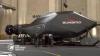 Meet Sunbird, a nuclear fusion-powered space tug concept from Pulsar Fusion.
 China and Russia launch 29-nation AI alliance to rival western control of technology
 BREAKING: China has begun manufacturing domestically developed Immersion Deep...
 Idaho's High Desert Becomes Hot Spot For Nuclear Power Revolution
 The World's Largest Electric Aircraft Is About to Take Its First Flight
 Tesla Cybercabs and Superchargers Will Act as Mini Cell Towers for SpaceX Starlink



The New McCarthys: 40% Of Professors Against Hiring A Trump-Voter
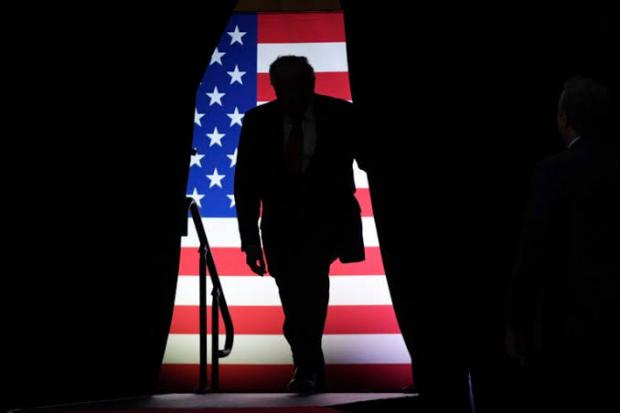
Indeed, it may be low given faculty reluctance to admit political bias or the delusion of others that they are without it. Yet, the virtual purging of Republicans from most departments reveals a long-standing ideological exclusion in higher education.
While far-left hires are common, even a moderate Republican is a rarity on faculties in a country with a majority of conservative and libertarian voters.
Even assuming that many faculty members will not expressly acknowledge their bias, this forty percent is willing to state that they will vote against candidates based on their political views without any consideration of the intellectual content of their scholarship.
In my book, "The Indispensable Right: Free Speech in an Age of Rage," I discuss these arguments to justify the current levels of intolerance and orthodoxy in higher education.
I had dinner with a Harvard Law Professor, who expressed disbelief that I expected him to vote for any faculty applicants who held views he considered wrong. When I noted that I regularly vote for faculty candidates who hold opposing views, he just shrugged and said that, if he rejects their views, he cannot vote for those views to be taught to students.
There are few remaining conservatives or libertarians on law school faculties, which have been purged of dissenting voices through a biased hiring and promotion system. Despite years of complaints and declining public trust in higher education, faculty members continue to reinforce bias and orthodoxy in our schools.
I wrote about the rise of this new McCarthyism on the left seven years ago.
Recently, I discussed the example of Fordham University School of Law professor John Pfaff, who called for "repercussions" for professors who do not "recant" their view that the 14th Amendment does not protect birthright citizenship.
Tolerance is intolerable for professors like Pfaff. After the decision in Trump v. Barbara, Professor Pfaff went on BlueSky to vent against anyone who dared to voice a dissenting view in academia, calling such faculty "parasites" that have to be effectively stomped out of higher education. In his post, Pfaff declared:
"There MUST be repercussions for the lawprofs who advanced such untenable arguments. Their behavior is — and I mean this literally, not dehumanizingly — parasitic.
They exploit norms of collegiality and presumptions of integrity to advance trash. Which undermines the work of ALL of us."
His rationale for punishing opposing viewpoints is an insight into the arguments used against intellectual diversity and institutional neutrality in higher education.
I recently participated in a debate with the President of the American Association of University Professors (AAUP), who opposed the principles of institutional neutrality.
Some sites, such as Above the Law, have supported the exclusion of conservative faculty. Senior Editor Joe Patrice defended "predominantly liberal faculties" by arguing that hiring a conservative law professor is akin to allowing a believer in geocentrism to teach at a university.