










Breaking News
 Democrats Celebrate El-Sayed Victory By Firing AK-47s Into The Air
 Who Decides What Makes A "Good" School?
 US DOJ relying on anonymous Israeli intel agent to convict US resident of Oct 7 participation
 Tensions Flicker into Flame, Lapping Across the Middle East
Top Tech News
 Voyager 1 approaches one light day from Earth
 Visual Implants
 Renewable Energy Breakthrough! World's Most Efficient Tesla Turbine System
 I Told You So
 Meet Sunbird, a nuclear fusion-powered space tug concept from Pulsar Fusion.
 China and Russia launch 29-nation AI alliance to rival western control of technology
 BREAKING: China has begun manufacturing domestically developed Immersion Deep...
 Idaho's High Desert Becomes Hot Spot For Nuclear Power Revolution
 The World's Largest Electric Aircraft Is About to Take Its First Flight
 Tesla Cybercabs and Superchargers Will Act as Mini Cell Towers for SpaceX Starlink



Free Trade: The Consensus Is Growing
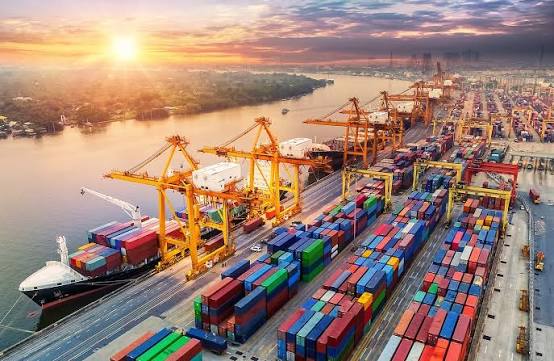
A recent interview in Foreign Affairs acknowledges: it's hard to name someone alive today who has had more of an effect on how America thinks about trade policy than Robert Lighthizer. In "The New Trade Order," he lays out the case against free trade. For decades, he says, Washington chased a free-trade fantasy. The "trifecta of stupid" (his phrase for NAFTA, the WTO, and permanent normal trade relations with China) exposed our markets, caused the "China shock," and shipped millions of manufacturing jobs overseas. The narrative result is a hollowed-out heartland where wages stagnated while coastal areas like San Francisco and New York City boomed, $27 trillion in wealth signed over to foreigners, and industrial towns so broken that men without college degrees now die eight years sooner than those with them.
By Lighthizer's account, our pursuit of free trade has caused all of this. "Nobody really believes in free trade," he told Foreign Affairs last week, "with the exception of the Harvard economics faculty and a few Anglophone politicians." This harkens back to US Trade Representative Jamieson Greer's indictment of economic models being a product of "elite consensus," as opposed to real world evidence.
There's just one problem. Today, with mountains of evidence, the verdict is in. As we've understood for 250 years now, protectionism has not led to the reindustrialization of America, has raised hardly any revenue, and has made us less safe, not more.
The Public Isn't Buying It
The American people seem to have noticed the pernicious effects of tariffs and other forms of protectionism. New polling among 3,000 registered voters in late July finds that support for free trade beats the opposition by more than four to one in every single income bracket. Further, it's popular with Republicans, Democrats, and Independents, and those with and without college degrees. Navigator Research finds that 59 percent of Americans view tariffs unfavorably against just 29 percent favorable. YouGov finds 72 percent of Americans understand that tariffs raise prices while just three percent think they lower them. And another poll finds that 64 percent of Americans disapprove of how the president has handled tariffs.
As if that weren't enough, a new Reuters/Ipsos poll finds that, for the first time in decades, "Democrats lead Republicans 37 percent to 36 percent on stewardship of the US economy." While a great deal of that can be attributed to high gas prices and the war with Iran, the public's verdict on protectionism is not in doubt.
Tariffs were sold as a means of supporting the "forgotten man at the bottom of the economic pyramid" against the "coastal elites." Despite this, the forgotten man wants free trade and overwhelmingly so. Non-college voters, the very people that Lighthizer is concerned about and wants to help, back free trade. Why have the supposed beneficiaries of tariffs turned against the very policy that was promised to deliver jobs, wealth, and security? The answer is simple: on all three counts, tariffs are not working.