










Breaking News
 The Iran off-ramp Trump keeps driving past
 Free Trade: The Consensus Is Growing
 Netanyahu says no Israeli withdrawal from Gaza until Hamas has been completely disarmed
 'When you kill it, it doesn't die': the jellyfish that has cracked the secret of immorta
Top Tech News
 Voyager 1 approaches one light day from Earth
 Visual Implants
 Renewable Energy Breakthrough! World's Most Efficient Tesla Turbine System
 I Told You So
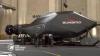 Meet Sunbird, a nuclear fusion-powered space tug concept from Pulsar Fusion.
 China and Russia launch 29-nation AI alliance to rival western control of technology
 BREAKING: China has begun manufacturing domestically developed Immersion Deep...
 Idaho's High Desert Becomes Hot Spot For Nuclear Power Revolution
 The World's Largest Electric Aircraft Is About to Take Its First Flight
 Tesla Cybercabs and Superchargers Will Act as Mini Cell Towers for SpaceX Starlink



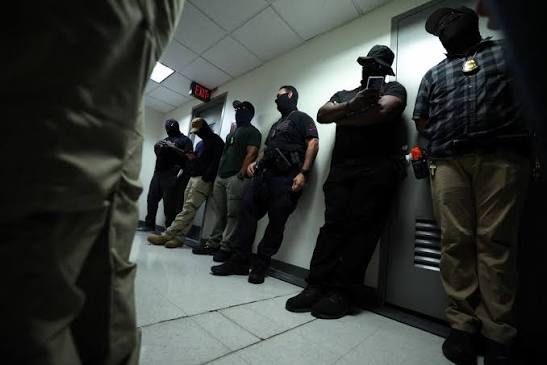
New York Cannot Ban Federal Agents From Wearing Masks, Judge Rules
U.S. District Judge Mae D'Agostino, for the Northern District of New York, wrote that New York state's perspective "is grounded in unavoidable observations of recent troubling events which loom darkly over the public perception of the manner in which federal immigration law is enforced."
"New York appears to be well-intentioned in its pursuit of transparent policing," she said in her ruling.
"However, the issue now before the Court is about constitutionality - not transparency or preferable policy decisions. There is a constitutional proscription on direct state regulation of federal agency operations."
She said that whether federal law enforcement agencies have chosen to carry out their operations in a "sufficiently transparent manner" was an important question, but it was not for the court to decide at this time.
Federal Agents Fear Doxxing
Federal agents have been wearing masks to protect their identities because they and their families fear being doxxed by activists.
The federal government argued that New York's law goes against the supremacy clause of the U.S. Constitution, which bars state governments from regulating federal law enforcement.
The Trump administration argued the New York state law violated "principles of intergovernmental immunity and are invalid under the Supremacy Clause because they unlawfully regulate or discriminate against the Federal Government ... or are preempted by federal law."
New York's law to ban face coverings and implement identification measures was included among several law enforcement policies in the state budget bill that was signed into law by Gov. Kathy Hochul, a D in May and came into effect in June, according to D'Agostino's ruling.
The definition of face coverings includes any "opaque mask, garment, helmet, headgear, balaclava, ski mask, neck gaiter, or tactical mask," but excludes transparent face shields, medical masks, or respirators.
On Feb. 9, 2026, a federal district court judge partially blocked a similar law in California, finding that it discriminated against federal officers.
Judge Christina Snyder of the U.S. District Court for the Central District of California ruled in favor of the Trump administration, prohibiting the state from enforcing its No Secret Police Act - which was scheduled to go into effect earlier this year - against federal law enforcement officers.
The federal government sued California, challenging both laws: the aforementioned law and the No Vigilantes Act, which requires federal officers to wear identification. Snyder ruled that the second law was not discriminatory.
Several other blue states had followed California and New York's example.