










Breaking News
 Democrats Celebrate El-Sayed Victory By Firing AK-47s Into The Air
 Who Decides What Makes A "Good" School?
 US DOJ relying on anonymous Israeli intel agent to convict US resident of Oct 7 participation
 Tensions Flicker into Flame, Lapping Across the Middle East
Top Tech News
 Voyager 1 approaches one light day from Earth
 Visual Implants
 Renewable Energy Breakthrough! World's Most Efficient Tesla Turbine System
 I Told You So
 Meet Sunbird, a nuclear fusion-powered space tug concept from Pulsar Fusion.
 China and Russia launch 29-nation AI alliance to rival western control of technology
 BREAKING: China has begun manufacturing domestically developed Immersion Deep...
 Idaho's High Desert Becomes Hot Spot For Nuclear Power Revolution
 The World's Largest Electric Aircraft Is About to Take Its First Flight
 Tesla Cybercabs and Superchargers Will Act as Mini Cell Towers for SpaceX Starlink



Who Decides What Makes A "Good" School?
I recently stayed in an Airbnb for the first time. I was visiting my older daughter in Milwaukee, where she was doing a summer undergraduate math fellowship at UWM. I generally prefer hotels, but there weren't any near the university, so I downloaded the Airbnb app and began searching for a spot to stay. I looked at proximity, price, and pictures to find a good fit. I ruled out some places based on tangible reasons, such as a lack of air conditioning, but also on intangible ones. I couldn't quite say why I didn't like certain spots, but I didn't. They just weren't for me. As I narrowed down my options, I scanned customer reviews and ratings to see what others thought of my finalists. Some of their assessments of quality mattered to me; others didn't. Then, I took the leap and booked my stay. It was a lovely home in a great location and I would happily return.
This experience got me thinking more about how we make choices in our lives. We all have distinct needs and preferences. Some of us like pickup trucks; others like Priuses. Some of us demand Dunkin' coffee (me!); others swear by Starbucks. Some of us prefer to live in the city; others in the suburbs. Some of us like to read mystery novels; others prefer science fiction. Some of us want one type of Airbnb experience; others prefer something else. We are all different, and that diversity is what makes our society so dynamic.
It's also why decentralization is crucial. No top-down policy could possibly satisfy all of our individual needs and preferences, and imposing such a policy would understandably breed discontent. As the Nobel Prize-winning economist Friedrich Hayek writes in The Road to Serfdom: "Our freedom of choice in a competitive society rests on the fact that, if one person refuses to satisfy our wishes, we can turn to another."
In education, we are thankfully starting to see the choice, variety, and abundance we enjoy in all other parts of our lives where market competition prevails. As education entrepreneurs launch new K–12 schools and learning spaces, and as the expansion of school-choice programs makes these learning environments more accessible, families are increasingly able to find an educational setting that satisfies their wishes, or turn to another when needed.
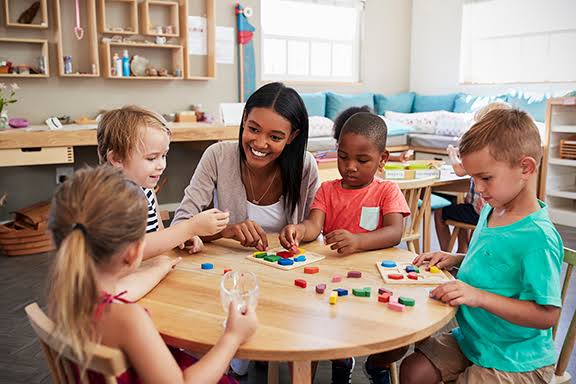
Like an Airbnb stay, that satisfaction is highly subjective. For some families, a school that satisfies their wishes is one that prioritizes rigorous, rote academics; for others, it could be a school where their kids spend most of the day outside, playing in nature. For many, it's likely somewhere in between.
I met a mom who recently enrolled her son in a private high school whose stated pillars are athletics, faith, and academics. In that order. Some families might choose schools with those three pillars in a different order, while others will choose different pillars altogether. In a free society, freedom of choice is paramount.
All of us will have our educational wishes satisfied in myriad ways, which is why we should be leery when politicians and policymakers seek to impose one-size-fits-all school-accountability requirements or other top-down metrics of educational "quality," such as student performance on standardized tests. This holds true for both public schools and private schools, including emerging ones and those participating in school-choice programs.