










Breaking News
 The Bride of Farmer...
 "What the Marxists never really quite figure out is that once they've achieved their goals.
 Trump willing to exit Iran war without nuclear deal if Hormuz reopens: Report
 Unpacking the Saudi Arabia-Pakistan-Turkey defense pact
Top Tech News
 EG4 Power Pro VS Ruixu Lithi VS Yixiang Budget Battery! Best Selling Battery Showdown!
 Insect wings can kill bacteria without any chemicals!
 5th Small Modular Reactor Validated Since June, Poised For Mass Production
 Tesla Never Made An Electric Jet Boat, So This YouTuber Built One Himself
 What could possibly go wrong? Scientists use AI to design new viruses
 Dual-motor suitcase drive underpins 3,000-hp hypercar
 DoorDash Wins Federal Approval To Fly Its Own Delivery Drones
 Shade-Resistant Solar Cells Retain 97% Efficiency After 2,000 Hours of Testing
 20 Ancient Engineering SECRETS
 Stonehenge Was Reanalyzed by AI -- And the Findings Are Hard to Explain



India-China thaw is a supply-chain truce, not a strategic reset
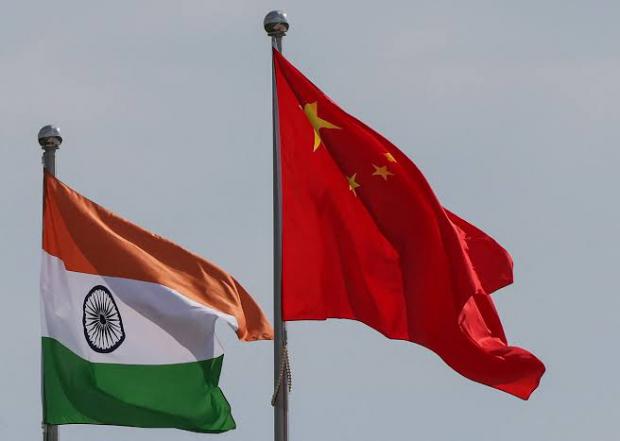
For six years, India ran its China policy on one simple assumption: if you're economically dependent on a rival with which you share a disputed border, that dependence is a liability.
After the 2020 Himalayan clashes, New Delhi tightened the screws – more scrutiny on Chinese investment, restricted business travel, several deals blocked or slow-walked. The message wasn't subtle: India would eat the economic cost if it meant shrinking China's grip on strategically sensitive sectors.
That's now being dialed back.
On August 6, Indian and Chinese officials sat down in New Delhi for the 36th round of their border-affairs working mechanism – one more step in a thaw that's already brought easier business travel, renewed commercial ties and a selective loosening of investment rules. Both sides went through the usual language about peace and tranquillity along the Line of Actual Control.
But don't confuse a quieter border with actual reconciliation. Yes, the 2024 disengagement deals cleared the remaining face-off points at Depsang and Demchok. That's real progress. It still isn't full de-escalation. Both sides still have large forces sitting across the wider frontier, and the territorial dispute itself hasn't moved an inch.
So calling this a rapprochement misses what's actually going on. India hasn't stopped competing with China. What's changed is that New Delhi seems to have worked out that de-risking and decoupling aren't the same thing – and that building something that can actually rival Chinese manufacturing might require more access to Chinese machinery and know-how in the near term, not less.
The $132 billion reality
The numbers explain the pragmatism. India bought nearly $132 billion in goods from China last fiscal year – more than from any other country. Total trade hit roughly $151 billion, with India's deficit topping $100 billion.
This isn't cheap consumer stuff. A big chunk of it is machinery, electronics, chemicals, components – the industrial inputs Indian manufacturers actually run on. This is the contradiction sitting at the heart of India's whole industrial strategy: New Delhi wants to become the next global alternative to Chinese manufacturing, but a lot of the factories that would make that happen still can't function without Chinese equipment.
India already learned how expensive that gap can be. After the post-2020 travel restrictions, manufacturers couldn't get the specialists they needed in the country to install, run and fix Chinese machinery. Reuters, reporting on the eventual visa easing, cited an estimate putting the cost to electronics production at around $15 billion over four years. Eventually India loosened the visa rules for Chinese professionals. The lesson was an awkward one: Restrictions meant to hem in China had been hemming in India's own factories just as much.