










Breaking News
 The Bride of Farmer...
 "What the Marxists never really quite figure out is that once they've achieved their goals.
 Trump willing to exit Iran war without nuclear deal if Hormuz reopens: Report
 Unpacking the Saudi Arabia-Pakistan-Turkey defense pact
Top Tech News
 EG4 Power Pro VS Ruixu Lithi VS Yixiang Budget Battery! Best Selling Battery Showdown!
 Insect wings can kill bacteria without any chemicals!
 5th Small Modular Reactor Validated Since June, Poised For Mass Production
 Tesla Never Made An Electric Jet Boat, So This YouTuber Built One Himself
 What could possibly go wrong? Scientists use AI to design new viruses
 Dual-motor suitcase drive underpins 3,000-hp hypercar
 DoorDash Wins Federal Approval To Fly Its Own Delivery Drones
 Shade-Resistant Solar Cells Retain 97% Efficiency After 2,000 Hours of Testing
 20 Ancient Engineering SECRETS
 Stonehenge Was Reanalyzed by AI -- And the Findings Are Hard to Explain



Unpacking the Saudi Arabia-Pakistan-Turkey defense pact
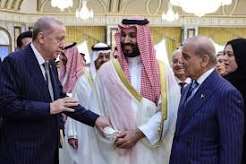
The recently signed Saudi Arabia-Pakistan-Turkey Joint Defense Agreement, concluded in Mecca on August 7, 2026, and referred to as the Makkah Joint Defense Agreement, marks a significant development in the evolving strategic architecture of the Middle East.
The agreement was signed by Saudi Crown Prince and Prime Minister Mohammed bin Salman, Pakistani Prime Minister Shehbaz Sharif and Turkish President Recep Tayyip Erdogan.
It establishes the principle that an armed attack on any one of the three countries would be treated as an attack on all three, reinforcing a collective defense commitment among the partners. It builds on the Strategic Mutual Defense Agreement signed between Saudi Arabia and Pakistan in September 2025 and seeks to broaden defense and security cooperation among the three countries.
While the agreement provides a framework for deeper military cooperation, including areas such as joint exercises, defense-industrial collaboration, technology transfer and intelligence sharing, its detailed operational mechanisms, specific military commitments and implementation provisions have not been publicly disclosed.
Saudi vulnerability, Turkish ambitions and Pakistan's military role
The timing of the agreement is particularly important. The Middle East remains deeply unstable, with the ongoing US-Iran conflict showing no immediate signs of a durable resolution. Iran-backed Houthi forces have intensified their military activities and threats against Saudi Arabia and Saudi-linked interests.
At the same time, the recently signed US-Saudi civil nuclear cooperation agreement remains tied to the broader question of Saudi-Israeli normalization, with Washington linking the nuclear arrangement's implementation to Riyadh joining the Abraham Accords.
The evolving Gaza situation, including discussions over the implementation of a possible peace framework, is also creating pressure on major Muslim countries to play a greater role in regional security and diplomacy.
For Saudi Arabia, the agreement reflects a growing concern about its vulnerability to threats from Iran and Iran-backed groups, particularly the Houthis. Riyadh has invested heavily in its economic transformation under Vision 2030, and prolonged regional insecurity directly threatens that ambition.
The closure of the Strait of Hormuz and renewed Houthi threats to Red Sea shipping have demonstrated how quickly regional conflict can disrupt Saudi trade, energy exports and investor confidence. Saudi Arabia therefore needs military partners capable of providing manpower, intelligence, technology and strategic depth.