










Breaking News
 Fly British Flags In UK And Face Jail... But Pakistan And Palestine Flags Get A Pass
 CIA Director Pushed Trump-Putin-Zelensky Summit During Moscow Visit: Report
 Iceland Voters Reject Reopening Talks To Join European Union
 "Profound Game-Changer": Musk Launching New Turbine Blade Factory To Solve Shortage...
Top Tech News
 Here's What to Expect as Air Taxis Actually Begin to Take Off
 'Wood Foam' Startup Uses Logging Waste as Substitute for Plastic, Producing 400 Pounds Daily
 How a Group of Young Men in 1933 Solved a Water Crisis in The Desert -- And Nobody Knows About It
 This American Battery Could Break China's Grip On The EV Supply Chain
 Tesla's Cybercab Launch Is Next Week. Here's What Tesla Still Needs To Prove
 800-passenger commercial plane boldly reinvents how we will fly
 Does Ultra-Fast Charging Ruin An EV Battery? BYD Did It 350 Times In 9 Days To Find Out
 Singapore is experimenting with biological computing using living human neurons...
 It's Happening - Europe is Building an Impossible Fusion Reactor
 Portable 1MW Kaleidos Microreactor Secures Critical Nuclear Fuel Deal Through 2030s



Daily Driving an Analog Car Today
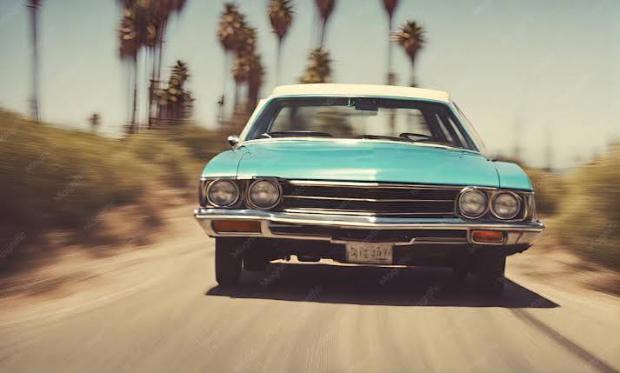
As an example, the '27 Ford F250 I am test-driving this week has plastic headlight assemblies that, if cracked (which is easy to do given they are plastic and unprotected) cost more than $800 each to replace. Yes, they provide better illumination than the glass headlights my '76 Pontiac's got. But the cost to replace one of my Pontiac's sealed beam headlights is about $25. They also never yellow – because they are glass rather than plastic and I can just replace them, because they do not have to be "paired" with the computer my '76 Pontiac hasn't got.
Just one example, to make the point.
It is a point that hits home, more and more. It is why an unprecedented thing is happening: More than just a few people are eschewing new in favor of old. Really old. They want an analog car; i.e., one that does not have a computer. Such cars haven't been new since the early 1980s, which is 40-plus years ago. That's how far back in time you'll have to go to find an analog car. But is such a car practical? Can it be driven daily, as opposed to just occasionally?
The answer to these two questions is yes – with some addendums.
Addendum One –
Analog cars require more frequent maintenance of their fuel-delivery and ignition systems. The good news is this maintenance is fairly simple and often costs very little or nothing, if you are willing and able to do some basic stuff such as check/adjust ignition timing and make minor adjustments to the carburetor – which is a purely mechanical (as opposed to electronic) thing.
Carburetors require occasional (once a year-ish) cleaning and adjustment of their linkages (specifically, the choke mechanism) to keep the engine running smoothly and starting easily, especially in cold weather. These are things almost anyone who is able to do an oil change themselves can learn how to do. Once you have learned, you'll never have to pay a dealer "technician" $100 per hour to "diagnose" whatever's gone wrong with the electronic fuel injection system in a new car.
You'll also have to remember to pump the gas pedal once or twice to set the choke when you first cold-start the car (and then wait the minute or so it takes for the engine to warm up enough to release th choke – by pumping the pedal once more).
Addendum Two –
Analog cars require your full time and attention. There is no Driver Assistance Tech. There are no Safety Nets. Cars made before the 1980s won't even have ABS, never mind stability control. Their brakes are – usually – adequate, if you buy one that has disc brakes up front, at least. Most of the cars by the mid-late 1970s will have disc brakes up front but if you go older than that, you may be dealing with drums at all four wheels. Again, these are adequate, provided you pay attention and don't tailgate the vehicle ahead of you. You'll need to learn how to threshold brake – or at least, learn not to just stomp the brake pedal in a panic, which will cause the wheels to lock and the car to go into an uncontrolled skid. You'll also need to learn how to control a skid, as when a car slips/slides because there's snow or ice (or both) on the road. Analog cars do not have traction control. It is up to you to learn how to keep it under control when traction is lost.