










Breaking News
 Trump Admin Weighs Emergency Powers To Boost Refining As Diesel Tops $6
 Modern miracle? Plastic waste transformed into effective fertilizer
 Bernanke Saved the System, Not the Economy
 It Might be Time to Get an EV . . .
Top Tech News
 NASA Super Light Solar Sail Project Will Be 12-40 Times Lighter and Faster
 Space Telescope Interferometer to Image Exoplanet Continents
 Twenty-five years of "temporary": how 9/11 built a surveillance state Americans never vote
 I'll Never Buy Another WALMART Battery!
 Shoei GT-Air 3 Smart helmet drops with built-in AR for $1,500
 Freezable titanium plate keeps your cooler chilled way longer than ice packs
 Review: Affordable thermal device is made for discovering life outdoors
 AI Whistleblower Tells Tucker How AI Could Kill All Humans by 2040
 You Hate Flock? Well There's More...
 Will Spiking Diesel Prices Drive Autonomous Trucking?



Modern miracle? Plastic waste transformed into effective fertilizer
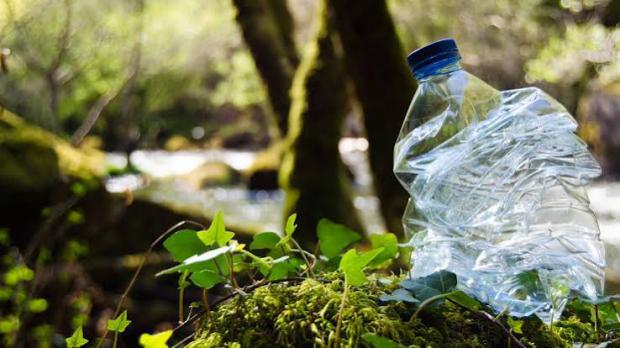
Those costs further incur massive financial costs of fixing (or least reducing) those ecological and medical burdens (transmitted via breathing, eating, and skin-contact), as from Bisphenol A (BPA) and phthalates which can cause heart, kidney, and lung disease, birth defects, and cancer.
Approximately 65% of plastic gets used for less than a month, yet will take anywhere from a century to a millennium to biodegrade, while approximately 80% of plastic lies in landfills or open spaces. As much as 10 million tons are polluting the ocean, not only trapping animals like improvised nets but poisoning them and coral in the form of microplastics.
So, if someone had a way of turning this global poison into a global ecological and agricultural balm, that'd be good, right? (It's not a trick question. The answer is yes.)
Inspired by Hayao Miyazaki's 1978 Future Boy Conan anime series which depicted turning plastic into edible bread, Assoc. Prof. Daisuke Aoki at Japan's Chiba University has done something he calls "very desirable indeed." In their open-access Scientific Reports paper, Aoki and his co-authors describe a polymer system for transforming waste plastic into "fertilizers that actively benefit ecosystems."
"We are at a critical turning point in the history of plastics," says Aoki. "While current strategies like reduction and traditional recycling are important, they are inherently 'passive' and do not offer active environmental benefits."
Aoki's previous research already showed how to use aqueous ammonia in a process called ammonolysis (using anhydrous ammonia to depolymerize polyethylene terephthalate into terephthalamide and ethylene glycol) to convert isosorbide-based poly (isosorbide carbonate) or PICs into the glucose-synthesized monomer isosorbide (ISB), urea, and other fertilizing agents.
Unfortunately, because PICs were hard and brittle (like other biodegradable plastics), they had limited uses, and their brittleness decreased their use-span, thus increasing waste while prompting even more plastic production for replacement.
So, Aoki's team created an ISB-based plasticizer (a chemical agent that increases flexibility) to make PICs softer and more capable of bending without shattering. It increased elongation at the break point by a factor of more than 10 – from 4.3% to 45.2% – while also ensuring the convertibility of the PIC into fertilizer through ammonolysis. In fact, even the plasticizer itself can be transformed into fertilizer. In experiments, these fertilizers grew Arabidopsis thaliana and komatsuna (a type of Brassica rapa) as effectively as commercially available urea fertilizers did.
"We wanted to move toward an 'active' environmental contribution," says Aoki, "by designing materials that solve the plastic waste problem while simultaneously addressing resource depletion and supporting sustainable agriculture."
If Aoki's team is successful, plastic could re-enter industrial and consumer life in ways that don't destroy the global biosphere (not to mention the humans who can't live without it). Newly designed polymers and plasticizers could help develop more flexible packaging, bags, seedling pots, and agricultural mulch films. Aoki says he anticipates his team's work could "lead to a fundamental paradigm shift where plastics are no longer viewed as 'waste' but as a 'valuable resource for food production."