










Breaking News
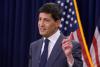 Warsh's First Test: Will the Fed Follow the Rules?
Trump's War In Iran Is Not Destroying Iran; It Is Destroying AMERICA
 NASA Chief: "We Just Built Antigravity Propulsion!"
 Carl Higbie (NEWSMAX) says LIVE on TV: "The Senate is supposed to vote on the Clarity Act NEXT
Top Tech News
 Quantum computing may soon become part of the microscope itself.
 Volkswagen Just Unveiled The Most Efficient EV Ever Tested
 NASA Super Light Solar Sail Project Will Be 12-40 Times Lighter and Faster
 Space Telescope Interferometer to Image Exoplanet Continents
 Twenty-five years of "temporary": how 9/11 built a surveillance state Americans never vote
 I'll Never Buy Another WALMART Battery!
 Shoei GT-Air 3 Smart helmet drops with built-in AR for $1,500
 AI Whistleblower Tells Tucker How AI Could Kill All Humans by 2040
 You Hate Flock? Well There's More...
 Will Spiking Diesel Prices Drive Autonomous Trucking?



Warsh's First Test: Will the Fed Follow the Rules?
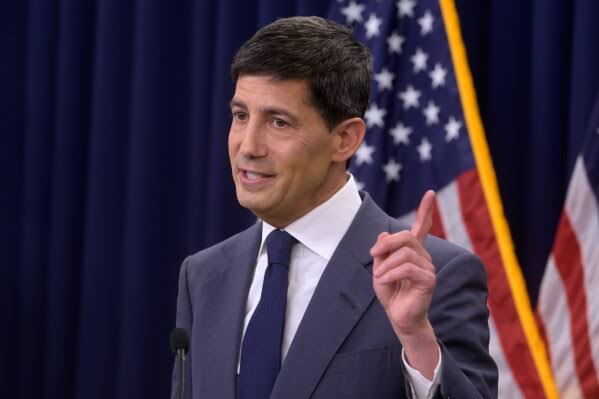
Market expectations have swung sharply leading up to the Federal Reserve's rate-setting meeting this week. With conflicting signals sent by Federal Open Market Committee members, traders moved back and forth between expecting the Fed to hold rates steady and anticipating a quarter-point increase. But following a positive jobs report and elevated inflation reading for August, CME FedWatch odds have moved firmly toward a rate hike.
The monetary policy rules have been much less volatile.
The Monetary Rules Report from AIER's Sound Money Project puts the appropriate federal funds rate somewhere between 3.79 and 6.02 percent. A quarter-point increase would lift the Fed's target range from 3.50–3.75 percent to 3.75–4.00 percent, bringing policy back into the lower end of the range prescribed by the leading rules.
That would also provide an early test of the monetary policy philosophy Chair Kevin Warsh laid out last month.
A Discipline, Not a Decision
Warsh used his recent Jackson Hole speech to criticize the Fed's reliance on forward guidance. By making "quasi-commitments" to future interest rate decisions, he argued that policymakers unnecessarily constrain their own freedom to respond to changing economic conditions. Warsh also called for the Fed to develop "more reliable models and more robust rules to guide policy decisions." He concluded by saying that he was committed to "a discipline, not to a decision."
This is a timely comment, as the monetary rules contrast with a lack of discipline at the previous few FOMC decisions. Holding steady in April was reasonable. The target for the federal funds rate was in line with the lower end of the range prescribed by the monetary rules, and there was significant uncertainty around the relatively new conflict in the Middle East. Since June, however, the rules have clearly signaled that policy is too accommodative given prevailing economic conditions.
The September meeting offers an opportunity to move policy back toward a more disciplined, rules-guided approach.
A rules-based approach does not mean that the federal funds rate is set mechanically or that monetary policy is put on autopilot. A formula cannot capture every relevant feature of the economy, and policymakers will naturally be tempted to exercise their own subjective judgment. The advantage of a rules-based approach is that it limits the errors that can arise from poor judgment. Following the guidance of monetary rules and publicly explaining deviations when they arise would help stabilize the public's expectations and prevent the most damaging policy errors. A rules-based approach is a direct path to a more disciplined monetary policy.
What the Rules Say
The Taylor Rule is the most familiar monetary rule. It recommends a higher interest rate when inflation is above target and a lower rate when economic activity falls below its sustainable level. Using the latest available data, the original Taylor Rule points to a federal funds rate of 6.02 percent. A modified version that smooths interest-rate changes and incorporates forecasts of future inflation produces a much lower prescription of 3.79 percent. A quarter-point hike at the upcoming meeting would move the target range to 3.75-4.00 percent, putting it squarely in line with the latter.