










Breaking News
 Swap Lines: The Federal Reserve Extends Its Tightrope
 The Transgender Mirage Is Cracking
 The Collapse of the Saudi-American Alliance?
 BREAKING: EPA eliminates rule that limits 'greenhouse gas' emissions from power plants
Top Tech News
 Quantum computing may soon become part of the microscope itself.
 Volkswagen Just Unveiled The Most Efficient EV Ever Tested
 NASA Super Light Solar Sail Project Will Be 12-40 Times Lighter and Faster
 Space Telescope Interferometer to Image Exoplanet Continents
 Twenty-five years of "temporary": how 9/11 built a surveillance state Americans never vote
 I'll Never Buy Another WALMART Battery!
 Shoei GT-Air 3 Smart helmet drops with built-in AR for $1,500
 AI Whistleblower Tells Tucker How AI Could Kill All Humans by 2040
 You Hate Flock? Well There's More...
 Will Spiking Diesel Prices Drive Autonomous Trucking?



When War Comes Home: A Constitutional Warning
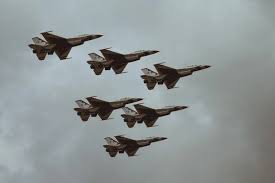
The war against Iran is a case study in the limits of military power, the dangers of presidential overreach and the enduring wisdom of the Constitution's separation of powers. It was unauthorized, unconstitutional, illegal, strategically incoherent and - by the standards by which wars must be judged - a geopolitical failure.
The American people were told that force would achieve clear objectives. Iran would be compelled to surrender. Somehow, American security would be enhanced. The region would become more stable.
Instead, the United States expended enormous resources, consumed scarce munitions, deepened regional instability and failed to produce the political outcome President Donald Trump promised. Senior military officials just last week warned him that extending large-scale operations risked exhausting critical military capabilities and weakening America's ability to respond elsewhere.
The United States can destroy buildings, eliminate targets, deploy aircraft, ships, missiles, drones and troops anywhere on the planet. But war is not a video game in which the destruction of enemy assets automatically produces political surrender. War is a contest of wills, societies, culture and endurance.
And here is the constitutional question that should have been asked before the first bomb was dropped: Who gave the president the authority to begin this war? The Constitution did not.
Article I, Section 8 gives Congress - not the president - the power to declare war. The framers deliberately rejected the British model in which kings could drag nations into conflicts based upon personal judgment, ambition or political convenience. James Madison warned that the executive branch was "the branch of power most interested in war," and therefore the Constitution placed the decision to enter war outside the president's constitutional reach.
The president is commander in chief. He commands forces after lawful congressional decisions have been made. He does not possess the power to transform his title into a personal authority to begin wars.
That principle has been repeatedly recognized by the Supreme Court. In cases such as Youngstown Sheet & Tube Co. v. Sawyer, the Court rejected the idea that President Harry Truman had unlimited power simply because he claimed national security. Justice Robert Jackson's famous concurrence warned that executive power is most dangerous when it operates in a "zone of twilight" where presidents attempt to expand authority beyond constitutional boundaries and without congressional concurrence.
The Iran war belongs precisely in that twilight - where executive ambition collides with constitutional restraint.
The administration may argue that modern threats require flexibility. That argument has been made by presidents of both parties for decades. But flexibility is not the same as unlimited authority. The Constitution was written for difficult moments, not easy ones. It was designed to restrain presidents even when they believe they have compelling reasons to act.