










Breaking News
 Swap Lines: The Federal Reserve Extends Its Tightrope
 The Transgender Mirage Is Cracking
 The Collapse of the Saudi-American Alliance?
 BREAKING: EPA eliminates rule that limits 'greenhouse gas' emissions from power plants
Top Tech News
 Quantum computing may soon become part of the microscope itself.
 Volkswagen Just Unveiled The Most Efficient EV Ever Tested
 NASA Super Light Solar Sail Project Will Be 12-40 Times Lighter and Faster
 Space Telescope Interferometer to Image Exoplanet Continents
 Twenty-five years of "temporary": how 9/11 built a surveillance state Americans never vote
 I'll Never Buy Another WALMART Battery!
 Shoei GT-Air 3 Smart helmet drops with built-in AR for $1,500
 AI Whistleblower Tells Tucker How AI Could Kill All Humans by 2040
 You Hate Flock? Well There's More...
 Will Spiking Diesel Prices Drive Autonomous Trucking?



The Collapse of the Saudi-American Alliance?
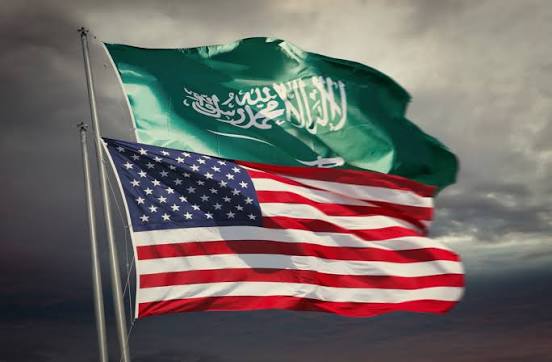
The Houthi forces of Yemen—the widely used name for Ansar Allah–launched a sweeping ground offensive against the Saudi proxies deployed against them, quickly putting the latter to flight, as they abandoned their military equipment in a wild panic. Within a couple of days, the Houthis had successfully seized a long stretch of important coastline as well as the local islands. This allowed them to completely consolidate their control of the Red Sea shipping lanes around the narrow Bab al-Mandab Strait, banning all Saudi cargo traffic.
The de facto leader of Saudi Arabia is Crown Prince Mohammed bin Salman (MBS). According to media reports he became so desperate at these successful Houthi advances that on Thursday he personally called President Donald Trump two separate times, pleading for American airstrikes that might turn the tide of battle and rescue the situation. But Trump rejected his requests.
Trump is so erratic, mercurial, and dishonest that his motives are seldom clear. But Mike Whitney noted that at a Friday news conference, Trump seemed to claim that he didn't want America to get in the middle of the conflict between the Houthis and the Saudis, so he decided to abandon the latter to their fate:
"The Houthis called us. They don't want to fight with us. They let us know they don't want to fight with us. They don't want us to go after them. They would much prefer not having us involved, and they are letting most ships go through. There's just one country they're not too happy with.
Despite his words, I think a far more plausible explanation is that Trump and his advisors recognized that they lacked any effective means of stopping the Houthi forces and they were extremely reluctant to demonstrate such total military impotence by trying to do so.
When the Houthis had previously interdicted Red Sea shipping a couple of years ago, Trump had boastfully promised to crush them, and he deployed an aircraft carrier task force to do so. But after weeks of combat and large numbers of airstrikes, the Houthis had remained unbowed, while Trump's forces had lost several aircraft and many advanced $30 million Reaper drones to Houthi missiles, forcing Trump to withdraw in failure.
In the wake of our unsuccessful war against Iran, America's military forces in the region are now far, far weaker than what they had been at the time. Our local bases have mostly been destroyed by Iranian missile strikes, our antimissile interceptors are severely depleted, and only a sole aircraft carrier is currently enforcing its distant blockade of Iran while stationed hundreds of miles away from the Iranian coast.
Constant attacks by Iranian missiles and drones had already forced us to withdraw our aircraft from the Persian Gulf region, redeploying them to air bases in Jordan.
But just a day or two before the Houthi ground offensive began, our main Jordanian base also came under very heavy Iranian attack, bombarded by 20 or more Iranian ballistic missiles. Initial news reports claimed that all these missiles had been shot down or missed their target, but sources then revealed that an A-10 aircraft had been destroyed and some eight F-15s were damaged.