










Breaking News
 The largest bondholder in the world's second largest bond market is shrinking its book...
 Whistleblower from inside the Obama administration exposes the election fraud cartel,...
 House Passes Resolution Ordering President Trump to End the Iran War
 "Were you fooled by Trump?" (Tucker Carlson and Jess Elofson interview)
Top Tech News
 Quantum computing may soon become part of the microscope itself.
 Volkswagen Just Unveiled The Most Efficient EV Ever Tested
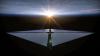 NASA Super Light Solar Sail Project Will Be 12-40 Times Lighter and Faster
 Space Telescope Interferometer to Image Exoplanet Continents
 Twenty-five years of "temporary": how 9/11 built a surveillance state Americans never vote
 I'll Never Buy Another WALMART Battery!
 Shoei GT-Air 3 Smart helmet drops with built-in AR for $1,500
 AI Whistleblower Tells Tucker How AI Could Kill All Humans by 2040
 You Hate Flock? Well There's More...
 Will Spiking Diesel Prices Drive Autonomous Trucking?



The Countries That Will Pay for the UN Tax Experiment
A corporation's worldwide profits would first be combined into one total and then divided among countries according to a formula measuring where it employs workers and where its customers purchase goods and services. Each country would apply its own corporate tax rate to the portion assigned to it, regardless of where the company legally reported the profit.
Tax Justice Network estimates that this reallocation would produce an additional $500 billion in annual corporate tax revenue worldwide. It would be redistributed among governments, creating major winners while stripping revenue from countries whose economies currently benefit from corporate headquarters, intellectual property, financial services, or low-tax structures.
Ireland would suffer one of the largest losses, surrendering an estimated $11.15 billion annually, or 81.9% of the multinational corporate tax revenue measured by the study. Hong Kong would lose $9.37 billion, or 75.7%; Singapore $8 billion, or 69.2%; Switzerland $5.43 billion, or 42%; the Netherlands $3.16 billion, or 28.4%; and Malta $3.04 billion. Bermuda would lose $489 million, the British Virgin Islands $496 million, Puerto Rico $547 million, Jersey $510 million, and Mauritius $152 million.
These jurisdictions currently tax profits that multinational corporations book within their borders despite having relatively little employment or customer activity there. The UN formula would disregard where those profits are legally reported and redistribute them toward countries where the company's workers and customers are located.
The UN claims some of these jurisdictions could theoretically recover the lost revenue by taxing their smaller remaining profit base at much higher rates. The study estimates that the Netherlands would need an effective rate of roughly 29% to 33%, compared with its present estimated rate of 13.6%. Switzerland would need approximately 20% to 25%, up from 10.4%, while Singapore would need between 25% and 37%, up from 9.2%.
Those numbers become absurd for economies heavily dependent on profit booking. Ireland would require an effective rate between 68% and 94% to replace the revenue it loses under the various formulas. The Cayman Islands could require between 28% and 162%, while the British Virgin Islands could require anything from 9% to 643%. That is an admission that these jurisdictions could not recover their losses through ordinary taxation without destroying the economic model the UN intends to dismantle.
However, the losers are not limited to traditional tax havens. Japan would lose an estimated $34.09 billion per year, equal to 27.1% of the multinational corporate tax revenue included in the study. Denmark would lose approximately $1.8 billion, or 31.9%, while Saudi Arabia would lose $1.77 billion, or 17.9%.