










Breaking News
 RFK Jr. on the VACCINE CARTEL...
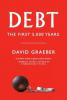 Debt: The First Five Thousand Years by David Graeber
 How a solar farm in the Gobi Desert created a new ecosystem
 HOA seizes man's $450K home over $977 debt - and sells it for just $8K
Top Tech News
 Quantum computing may soon become part of the microscope itself.
 Volkswagen Just Unveiled The Most Efficient EV Ever Tested
 NASA Super Light Solar Sail Project Will Be 12-40 Times Lighter and Faster
 Space Telescope Interferometer to Image Exoplanet Continents
 Twenty-five years of "temporary": how 9/11 built a surveillance state Americans never vote
 I'll Never Buy Another WALMART Battery!
 Shoei GT-Air 3 Smart helmet drops with built-in AR for $1,500
 AI Whistleblower Tells Tucker How AI Could Kill All Humans by 2040
 You Hate Flock? Well There's More...
 Will Spiking Diesel Prices Drive Autonomous Trucking?



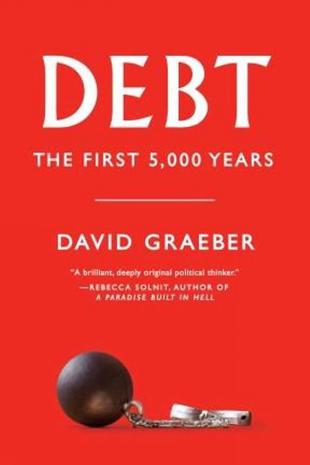
Debt: The First Five Thousand Years by David Graeber
There seems little doubt that history, widely rumored to have come to an end a few years
ago, has gone into overdrive of late, and is in the process of spitting us into a new political and
economic landscape whose contours no one understands. Everyone agrees something has just
ended but no one is quite sure what. Neoliberalism? Postmodernism? American hegemony? The
rule of finance capital? Capitalism itself (unlikely for the time being)? It's even more difficult
to predict what's about to be thrown at us, let alone what shape the forces of resistance to it
are likely to take. Some new form of green capitalism? Knowledge Keynesianism? Chinese-style
industrial authoritarianism? 'Progressive' imperialism?
At moments of transformation, one of the few things one can say for certain is that we don't
really know how much our own actions can affect the outcome, but we would be very foolish to
assume that they cannot.
Historical action tends to be narrative in form. In order to be able to make an intervention
in history (arguably, in order to act decisively in any circumstances), one has to be able to cast
oneself in some sort of story — though, speaking as someone who has actually had the opportu-
nity to be in the middle of one or two world historical events, I can also attest that one in that
situation is almost never quite certain what sort of drama it really is, since there are usually sev-
eral alternatives battling it out, and that the question is not entirely resolved until everything is
over (and never completely resolved even then). But I think there's something that comes before
even that. When one is first trying to assess a historical situation, having no real idea where one
stands, trying to place oneself in a much larger stream of history so as to be able to start to think
about what the problem even is, then usually it's less a matter of placing oneself in a story than
of figuring out the larger rhythmic structure, the ebb and flow of historical movements. Is what
is happening around me the result of a generational political realignment, a movement of cap-
italism's boom or bust cycle, the beginning or result of a new wave of struggles, the inevitable
unfolding of a Kondratieff B curve? Or is it all these things? How do all these rhythms weave
in and out of each other? Is there one core rhythm pushing the others along? How do they sit
inside one another, syncopate, concatenate, harmonise, clash?