










Breaking News
 Xi Dada Explains the Facts of Life to a Sociopath
 The Psychology of Tyranny and Manipulation
 U.S. Beekeepers Sue USDA, Alleging Imported "Organic" Honey Misleads Consumers...
 Mexico Is Growing Because It Still Produces Something
Top Tech News
 Tesla Model 3 killer charges from 10 to 97% in just 9 minutes
 World-first unpowered DNA computer sets speed record
 I Power 5 Buildings Off-Grid. Here's How
 The US government is pushing hard to get a working nuclear fission reactor into space by late 2028
 SpaceX Starmind AI in Space Radiator
 China Will Dominate Global Nuclear Energy Through 2035, Analyst Says
 These Absolutely Wild-Looking EVs Are Saudi Arabia's First Homegrown Cars
 BEYOND THE MOON: NASA plans a nuclear-powered fleet to push DEEPER into space
 Big Oil Backs Mazama's $135 Million Bet On Superhot Geothermal
 Quantum compass takes flight on Northrop's Lumberjack drone


Xi Dada Explains the Facts of Life to a Sociopath
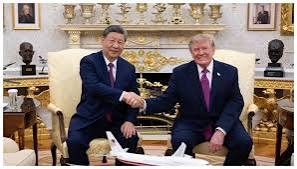
GUANGZHOU – Chinese President Xi Jinping made the ask directly in the Oval Office. The "deciding mode" President – who's mulling whether to commit nuclear genocide against Iran, as he revealed in the UN podium – did not say yes.
Xi told Trump directly that China favors an immediate U.S. return to the Islamabad Memorandum of Understanding (MoU) – yes, the famous dead cat. Negotiations should resume "as soon as
possible," leading to a comprehensive agreement that includes the nuclear issue.
No breakthrough though. The White House issued no readout of its own. Trump deflected all questions on the substance of his 3-hour meeting with Xi. It's fascinating how the explosive Iran file was managed out of the summit rather than into it.
In parallel, what we could call the New York channel survived, and might be converging on a phased trade.
Negotiators are exploring a staged exit: Iran reopens the Strait of Hormuz; the U.S. simultaneously lifts the Trump naval blockade; and frozen assets should follow. Tehran would then move its transit-fee demand into a side attachment. Not exactly a brilliant idea – considering the gangsters they are dealing with.
At least the whole thing is now explicit. Neither side will surrender its leverage first.
The extra problem is that Tehran may have opened a second front against its own negotiator. Lawmakers in Tehran tabled an impeachment motion against Foreign Minister Araghchi, accusing him of talking to U.S. officials without authorization.
To critics that slammed Araghchi for having no Supreme National Security Council (SNSC) approval, a senior Iranian official said that the delegation had "full authority".
That reflects the serious domestic debate between the reformists and the more hardline IRGC vector. The question is no longer only what Iran will offer; but who in Tehran should authorize the offer.
There's no question that ultimately should be Mohsen Rezaee, secretary of the SNSC and personal representative of Leader Mojtaba Khamenei. Any diplomatic concession will have to be approved by him.
Iranian President Pezeshkian reconfirmed to Pakistan's Prime Minister Sharif in a New York bilateral that the dead cat MoU remains "fully acceptable".