










Breaking News
 India's Essar Group to invest $18 billion in US, build largest steel plant in American history
 US nuclear pact puts Saudi Arabia on path to the bomb
 "De-Globalization Endgame": Deutsche Bank Warns Historic Copper Squeeze Could Ignite 50% R
 Leaked Anthropic IPO Prospectus Shows $42BN Net Loss, $518BN In Unfunded Spending...
Top Tech News
 Tesla Model 3 killer charges from 10 to 97% in just 9 minutes
 World-first unpowered DNA computer sets speed record
 I Power 5 Buildings Off-Grid. Here's How
 The US government is pushing hard to get a working nuclear fission reactor into space by late 2028
 SpaceX Starmind AI in Space Radiator
 China Will Dominate Global Nuclear Energy Through 2035, Analyst Says
 These Absolutely Wild-Looking EVs Are Saudi Arabia's First Homegrown Cars
 BEYOND THE MOON: NASA plans a nuclear-powered fleet to push DEEPER into space
 Big Oil Backs Mazama's $135 Million Bet On Superhot Geothermal
 Quantum compass takes flight on Northrop's Lumberjack drone


US nuclear pact puts Saudi Arabia on path to the bomb
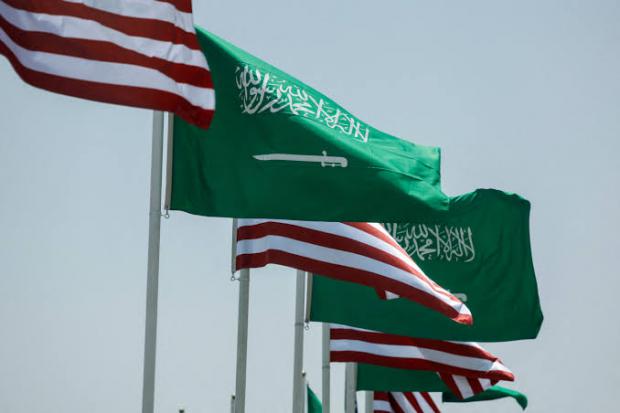
A contentious civilian nuclear agreement between the US and Saudi Arabia has ignited a sharp debate over Middle Eastern security, laying bare the escalating friction between American nonproliferation objectives and the kingdom's strategic ambitions.
This month, The Washington Post reported that a classified US intelligence assessment shared with Congress found that Saudi Arabia has not ruled out developing nuclear weapons, prompting alarm among lawmakers about US President Donald Trump's agreement to assist Saudi Arabia in building a civilian nuclear energy program.
The multi-billion-dollar pact, finalized in July 2026 to counter Chinese and Russian regional influence, initially limits uranium enrichment to under 5% but permits future enrichment up to 20% without requiring Saudi accession to the International Atomic Energy Agency's (IAEA) intrusive Additional Protocol inspections.
Democratic lawmakers and arms-control specialists warn this framework grants the kingdom a direct path to fissile material, risking a Middle Eastern proliferation spiral amid elevated tensions with Iran. Opponents also allege conflicts of interest involving administration associates, notably Westinghouse Electric and Trump's son-in-law adviser Jared Kushner.
While the US State Department maintains the agreement enforces realistic nonproliferation standards and Saudi Arabia asserts its intentions are entirely peaceful, congressional Democrats are mobilizing legislation to block the measure during an active 90-day statutory review window. Any proposed legislation to block the deal will likely face a presidential veto.
At the same time, it remains unclear whether the US's strategic concessions will bind Saudi Arabia to American nonproliferation norms or accelerate the regional arms spiral they are meant to prevent.
Long before the Iran war broke out in February 2026, Saudi Crown Prince Mohammed bin Salman had explicitly positioned the kingdom to rapidly develop nuclear weapons if regional arch-rival Iran acquires the bomb.
In line with that stance, Saudi Arabia has systematically leveraged US-brokered normalization talks with Israel to secure domestic uranium enrichment capabilities alongside Chinese-backed ballistic missile infrastructure, while warning it could turn to China or Russia if the US imposes strict nonproliferation limits.