










Breaking News
 Do "news reports" Have Any Value?
 Governor Abbott Declares Texas Disaster Allows "Red Diesel". Will It Help?
 Crazy Gas Prices and Free Potatoes
 U.S. Requests Germany and France to Release Emergency Diesel
Top Tech News
 Most artificial limbs rely on silicone or plastic to mimic human hands.
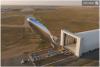 Flying cell tower beams phone signal to Japan from 10 miles up
 Chinese Commercial Reactor Achieves Nuclear Fusion with Clean Hydrogen-Boron Fuel
 Med Beds Just Took a MASSIVE Step Forward, Healing People in Days!
 Palmer Luckey: Autonomous Weapons Are Ancient and Why Anduril Won't Build Humanoids | EP #295
 A laser just photographed objects through six feet of concrete
 Elon Musk's Next-Gen Motor Destroy Entire EV Industry
 China's disputed satellite refueling heralds new space war era
 BYD Will Put Solid-State Batteries In An EV Next Year: Executive
 FDA-cleared exoskeleton puts spinal-cord patients back on their feet



House Bill Would Ban Federal Use of Flock ALPR Data

A new US bill, Ban Flock Act, has been introduced, with the aim of stopping the federal government from using automated license plate readers (ALPRs).
"Flock is eviscerating the very notion of privacy by installing tens of thousands of cameras in communities across America without their consent," said Senator Bernie Sanders, who is planning a Senate version.
"Going to the doctor? Flock knows. Dropping your kid off at school? Flock is tracking you. Flock is always watching," he continued.
According to the text of the House bill, H.R. 10691, federal agencies and officials are to be banned from acquiring, possessing, accessing or using ALPRs, or data collected by these devices, without an Act of Congress that explicitly authorizes it.
This would include data collected by private security networks, homeowners' associations, commercial parking operators, and data brokers.
Any such authorization must set data retention at no more than 48 hours, and "rigorous protections for due process, privacy, free speech and association."
State and local governments that have ALPRs would not be eligible for grants from the Justice, Transportation, Health and Human Services, Housing and Urban Development, and Homeland Security departments.
The bill, whose sponsors in the House are Alexandria Ocasio-Cortez and in the Senate Jeff Merkley, also seeks to make sure that no federal money is used to buy, lease, or operate ALPRs, while evidence obtained in violation of the proposed legislation would be inadmissible in federal court.
Individuals would be able to sue for actual and punitive damages, while state attorneys general would be able to sue to enforce the ban.
Toll systems would be exempt from the ban, but the data collected would have to be deleted within 48 hours of payment, and could not be checked against a law enforcement hot list.
"AI-powered cameras are keeping track of our every move and weaponizing this data against working people to make record profits," Ocasio-Cortez said.
Merkley noted that the right to privacy includes the freedom to move around the community without every move being monitored.
The Ban Flock Act is not the first attempt of its kind – in early September, Republicans Thomas Massie and Eric Burlison introduced the Flock-Off Act, H.R. 10221, that also seeks to cut federal funding to state and local governments that use ALPRs, as well as biometric surveillance cameras.
In August, Florida Governor Ron DeSantis ordered Flock cameras to be removed from state highways within 30 days, a year after the state approved $4.6 million for 440 of these devices.