










Breaking News
 Houthis Attack Multiple Saudi Airports, Wounding Bystanders - Warn Civilian Infrastructure...
 Google Plugs Into Constellation's Nuclear Reactors As PJM's "Bring Your Own Power"
 Federal Survey Of 21,990 Kids Ties COVID Shots To Autism, ADHD
 French Bonds Rally As Le Pen Unveils Shadow Budget To Pull France Back From Fiscal Brink
Top Tech News
 SHOCK CASE REPORT: Advanced Alzheimer's Patient Regains Speech, Memory, Mobility...
 Most artificial limbs rely on silicone or plastic to mimic human hands.
 Flying cell tower beams phone signal to Japan from 10 miles up
 Chinese Commercial Reactor Achieves Nuclear Fusion with Clean Hydrogen-Boron Fuel
 Med Beds Just Took a MASSIVE Step Forward, Healing People in Days!
 Palmer Luckey: Autonomous Weapons Are Ancient and Why Anduril Won't Build Humanoids | EP #295
 A laser just photographed objects through six feet of concrete
 Elon Musk's Next-Gen Motor Destroy Entire EV Industry
 China's disputed satellite refueling heralds new space war era
 BYD Will Put Solid-State Batteries In An EV Next Year: Executive



Behind Saudi Arabia's Houthi problem lies a policy of outsourcing security -- to US and Pakistan
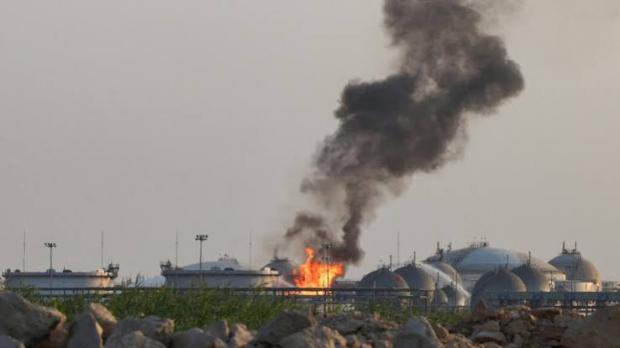
The failure to rein in the Houthis showed that Saudi Arabia's decades-long practice of outsourcing its security, first to the United States and later to Pakistan, failed both to deter the attacks and to punish once the offensive began, West Asia expert Prof. Alvite Ningthoujam said.
For decades, Saudi Arabia relied on the United States and Pakistan for its national security.
For all practical purposes, the United States and Saudi Arabia were allies, with the presence of American fighter jets and personnel in the kingdom serving as a de facto security guarantee. Pakistan has been central to the kingdom's national security since the 1960s: Pakistan fought in the Saudi-South Yemen War of 1969, signed the Protocol on the Deployment of Armed Forces in 1982, and deployed up to 20,000 soldiers to the kingdom over the following years.
In 2025, Saudi Arabia and Pakistan formalised their alliance through a mutual defence agreement and expanded it this year with the Mecca Agreement.
But neither the United States nor Pakistan came to Saudi Arabia's aid as the Iran-backed, Yemen-based Houthis battered the kingdom. While President Donald Trump flatly refused Crown Prince Mohammed bin Salman's requests to intervene, Pakistan did not even condemn the Houthis even as they attacked Mecca, the holist city for Muslims.
'Saudi Arabia's entire national security policy collapsed'
It was only after a month of bombardment, including attacks on Mecca and Medina, Islam's two holiest cities, that Pakistan and Turkey activated the Mecca pact. But the alliance's deterrence value lay in tatters by then
Ningthoujam said the Saudis had become complacent about their national security because they were confident of an American response in case of a crisis and unquestioned Pakistani support considering how much Pakistan owed the kingdom — the Saudis had not only bailed Pakistan out economically on numerous occasions but had also financed its nuclear weapons programme.
But Ningthoujam noted that Trump exited the theatre as soon as the Houthis began attacking Saudi Arabia.
MBS has since turned to the United Kingdom and France for military assistance as his decades-long security guarantors stayed out of the conflict.
"Saudis were under the false belief that the war would never come to them because of the American presence and implicit security guarantees. That's why they never build a robust military because they always believed they could buy security. This was also the case with Pakistan. They became a cash stream for Pakistan in exchange for military support and nuclear umbrella. But none of that mattered when the Houthis began the offensive. The entire national security policy of the Saudis collapsed," said Ningthoujam, Deputy Director of Symbiosis School of International Studies (SSIS) at Symbiosis International University, Pune.