










Breaking News
 Houthis Attack Multiple Saudi Airports, Wounding Bystanders - Warn Civilian Infrastructure...
 Google Plugs Into Constellation's Nuclear Reactors As PJM's "Bring Your Own Power"
 Federal Survey Of 21,990 Kids Ties COVID Shots To Autism, ADHD
 French Bonds Rally As Le Pen Unveils Shadow Budget To Pull France Back From Fiscal Brink
Top Tech News
 SHOCK CASE REPORT: Advanced Alzheimer's Patient Regains Speech, Memory, Mobility...
 Most artificial limbs rely on silicone or plastic to mimic human hands.
 Flying cell tower beams phone signal to Japan from 10 miles up
 Chinese Commercial Reactor Achieves Nuclear Fusion with Clean Hydrogen-Boron Fuel
 Med Beds Just Took a MASSIVE Step Forward, Healing People in Days!
 Palmer Luckey: Autonomous Weapons Are Ancient and Why Anduril Won't Build Humanoids | EP #295
 A laser just photographed objects through six feet of concrete
 Elon Musk's Next-Gen Motor Destroy Entire EV Industry
 China's disputed satellite refueling heralds new space war era
 BYD Will Put Solid-State Batteries In An EV Next Year: Executive



The illusion of America's withdrawal from Iraq
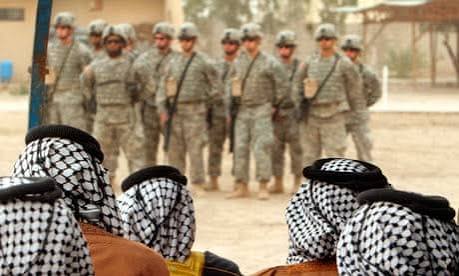
The American withdrawal from Iraq is not an end but a strategic pivot, a calculated transition from direct occupation to remote containment.
By pressuring Iraq to disarm its resistance groups, Washington aims to neutralize Iran's forward defense line and clear the battlefield for a potential full-scale confrontation with Tehran.
This gambit risks either delivering Iraq into a long-lasting new foreign domination or fracturing the region into warring militias. The celebrations surrounding America's departure from Iraq are premature, while the real battle for the Middle East's future has only just begun in a new way.
On September 30, when the last American soldier left Iraq, celebrations echoed not only through Iraqi streets but through the barracks of the American-allied Iraqi national army as well. Local communities and the so-called resistance groups held rallies together.
For a moment, few paused to consider the deep American penetration that remains or the powerful Iran-backed armed groups that operate in Iraqi streets almost like a regular army. For Iraqis, the American absence is more than a symbol of national liberation. Yet the reality and the grand strategy behind this withdrawal demand scrutiny.
The departure of combat forces does not end American influence. It marks a transition to a more nuanced phase of warfare. The objective is no longer territorial occupation.
It is the use of political structures and control over the financial and international infrastructure on which the Iraqi economy depends to function daily. To understand Iraq today, we must look beyond celebrations of national sovereignty and examine the structural dynamics that continue to shape the region.
Neutralization of deterrence
The primary strategic objective of the United States after withdrawal is the neutralization of armed groups that form the backbone of the Axis of Resistance in Iraq.
These groups refuse to lay down their arms. They are not hopeful about integration into the national army, and for that reason they seek to preserve the status quo. Their resistance remains a deterrent against American hegemony in the region.
By withdrawing conventional forces, Washington seeks to eliminate the primary justification for these groups. The logic is simple: If the foreign occupier is gone, the resistance's raison d'être disappears.