










Breaking News
 Inmates Baptized at Sheriff's Office in Powerful Display of Gospel Truth
 WATCH: Maricopa County Election Employees Seen Late at Night Using Flash Drives on Certified...
 This Won't End Well... Seattle Becomes First City To Price-Fix Your Groceries
 Trump Says "Time For Ukraine To Get A New Leader" After Zelensky Ignored Six Pleas...
Top Tech News
 Seven apps. One craft
 SHOCK CASE REPORT: Advanced Alzheimer's Patient Regains Speech, Memory, Mobility...
 Most artificial limbs rely on silicone or plastic to mimic human hands.
 Flying cell tower beams phone signal to Japan from 10 miles up
 Chinese Commercial Reactor Achieves Nuclear Fusion with Clean Hydrogen-Boron Fuel
 Med Beds Just Took a MASSIVE Step Forward, Healing People in Days!
 Palmer Luckey: Autonomous Weapons Are Ancient and Why Anduril Won't Build Humanoids | EP #295
 A laser just photographed objects through six feet of concrete
 Elon Musk's Next-Gen Motor Destroy Entire EV Industry
 China's disputed satellite refueling heralds new space war era



Paramount-Warner Reveals The Extent Of California's Control
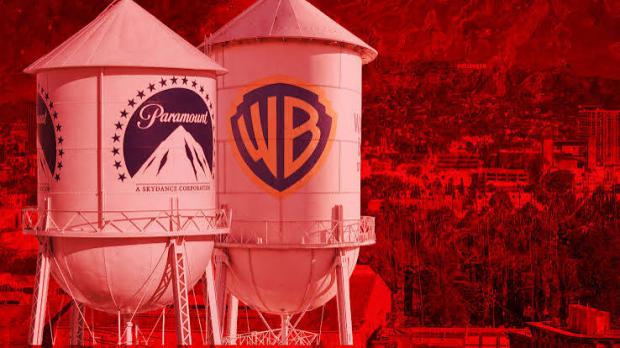
The settlement, however, goes far afield from antitrust. A state Attorney General is a political office-holder. It is neither surprising nor inappropriate that each would bring political considerations into the decision to sue, and now to settle a suit, against a merger of the prominence of Paramount-Warner Brothers.
What is inappropriate, however, is to extract promises that have nothing to do with antitrust in order to settle an antitrust case.
Antitrust officials in Europe, the UK, and at the US Department of Justice approved the merger. These agencies hold diverging approaches to antitrust, with the European Union authorities perceived as the most aggressive. That all three approved the merger is a strong indicator that the merger posed no antitrust issues.
The twelve states continued their opposition, nonetheless. The terms of the settlement indicate why.
What the states have obtained has little to do with antitrust and a lot to do with political control of the media and saving jobs in California. The federal anti-merger law passed in 1914 prohibits mergers that may "substantially... lessen competition or... tend to create a monopoly" in any "line of commerce."
Over the 112 years since passage, the words of the statute have been interpreted by federal courts to require a definition of relevant market as a "line of commerce." In film, the concept of a relevant market as movies produced for live audiences in movie theaters is antiquated. Streaming services and cable channels actively compete with in-theater releases. AI assisted film-making has far less need for a back-lot, costumes, and props. The studio-contract system of actors has long been supplanted by actors as independent competitors. With computer-assisted manipulation of actors' images, acting itself has taken on a new meaning.
A merger between Paramount and Warner Brothers in the 1950's, before any of these innovations, would have raised serious antitrust issues in the relevant market of film-making for theaters. That is no longer a relevant market.
What the State Attorneys General have obtained is not an antitrust decree but a set of concessions to address concerns about growing right-wing influence in cable news. The State Attorneys General voiced concern that the merger would combine CNN and CBS under single (feared conservative) management.
The settlement requires Paramount, within six months, to create an independent review committee to prevent that from happening. Presumably, the federal court would be available to monitor compliance with this provision of the settlement - though how that could be done consistent with the First Amendment is hard to see.