










Breaking News
 Are the United States and Israel in Decline-and-Fall Mode?
 A Culture of Death
 You Can't Reason With THIS…
 Wall Street Is Quietly Selling AI (And Nobody's Told You)
Top Tech News
 I Built a Website to Expose Solar and Battery Scams
 Whistleblower Issues Dire Warning: Rogue AI, Hacking Nuclear Programs...
 Multi-material insulation delivers up to 10,000 x the stiffness
 Anduril's plan to save US sub edge from China's undersea surge
 Researchers Develop AI 'Mind-Reading' Tool That Reconstructs What Your Eyes See
 Video: Dexterous robot hand learns the delicate art of silk embroidery
 The computer that can read your mind:
 Seven apps. One craft
 SHOCK CASE REPORT: Advanced Alzheimer's Patient Regains Speech, Memory, Mobility...
 Most artificial limbs rely on silicone or plastic to mimic human hands.



Are the United States and Israel in Decline-and-Fall Mode?
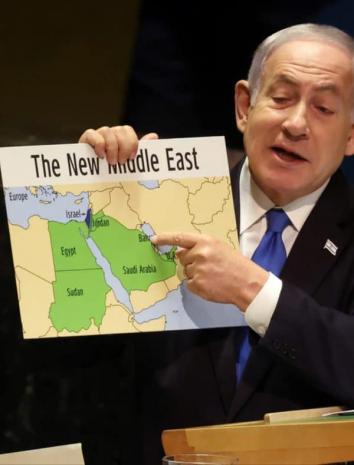
Speculation is growing over the sustainability of the United States' model of global dominance which emerged as Washington ended the Second World War as plausibly the sole superpower. That role was first tested in the Korean War, which produced something of a stalemate in a confrontation that included China, and led to a Ceasefire Agreement which is still in place to this day. More recently the collapse of the Soviet Union in 1991, even given the disastrous and pointless war in Vietnam, confirmed the US's superior military, political and financial status, leading to an affirmation of American dominance as an essential element in global political stability in several initiated and mandated policy documents including in the statement of principles spelled out in 1990's which was later published in September 2000 as the Rebuilding America's Defenses: Strategy, Forces, and Resources for a New Century: a Project for the New American Century (PNAC). The final elaboration of the policy was derived from the so-called "Wolfowitz Doctrine" which was the common referral to national defense guidance developed when Paul Wolfowitz, working for Vice President Dick Cheney, was Associate Secretary of Defense. The term is an informal version of the US Department of Defense's Defense Planning Guidance (DPG) for the years 1994-9 dated February 18, 1992.
As the first DPG after the Cold War and first Gulf Wars ended and the draft described the United States as the world's only superpower it made preventing the emergence (or re-emergence) of a global or regional competitor a top priority. This objective included preventing any hostile power's dominance of strategically or resource rich important regions that could produce alternative sources of global power. It argued that that the US Military must remain sufficiently strong enough to deter possible competitors, retaining the ability to act unilaterally if necessary. The PNAC declaration called for a continuing global leadership role for the United States which implied the resort to preemptive war against adversaries when needed.
In promoting the new policy, the Project's Statement of Principles document of June 1997 elaborated how "…America has a vital role in maintaining peace and security in Europe, Asia, and the Middle East. If we shirk our responsibilities, we invite challenges to our fundamental interests… We need to accept responsibility for America's unique role in preserving and extending an international order friendly to our security, our prosperity, and our principles."