










Breaking News
 Johnny Depp is the swashbuckling star they couldn't cancel! Eight years after Disney dropped...
 Hero father Kaylub Giamanco, who brought down Oregon school shooter, happened to be driving...
 Mount St Helens triggers aviation warnings after winds whip up old volcanic ash into the skies
 Netflix bosses 'freaking out' over poor test screenings for director Greta Gerwig's $280
Top Tech News
 I Built a Website to Expose Solar and Battery Scams
 Whistleblower Issues Dire Warning: Rogue AI, Hacking Nuclear Programs...
 Multi-material insulation delivers up to 10,000 x the stiffness
 Anduril's plan to save US sub edge from China's undersea surge
 Researchers Develop AI 'Mind-Reading' Tool That Reconstructs What Your Eyes See
 Video: Dexterous robot hand learns the delicate art of silk embroidery
 The computer that can read your mind:
 Seven apps. One craft
 SHOCK CASE REPORT: Advanced Alzheimer's Patient Regains Speech, Memory, Mobility...
 Most artificial limbs rely on silicone or plastic to mimic human hands.



Mount St Helens triggers aviation warnings after winds whip up old volcanic ash into the skies
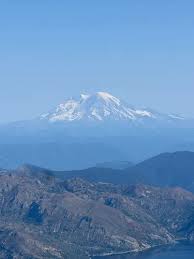
A SIGMET, a serious aviation weather alert, was issued late Thursday, lasting until early Friday, as satellite imagery and webcams captured a plume of ash drifting northwest of Washington State's notorious volcano, located south of Seattle.
The volcanic ash cloud rose as high as 12,000 feet above sea level, posing a potential hazard to aircraft flying through the area.
The warning raised fears of renewed volcanic activity at the site of one of America's deadliest eruptions.
Images from the US Geological Survey's (USGS) web cameras monitoring the volcano captured plumes of ash engulfing the formation, creating the impression that it had suddenly reawakened.
However, officials stressed that powerful winds had swept up old volcanic ash from the ground, creating a potential hazard for aircraft flying through the area.
Mount St Helens experienced a major eruption on May 18, 1980, sending a plume of ash 2.5 miles into the sky.
A total of 57 people died, and more than 200 homes were destroyed, earning it the nickname America's deadliest volcano.
A high-pressure weather system over the Pacific Northwest brought powerful winds sweeping across the Cascade Mountains, stirring up decades-old volcanic ash from Mount St Helens and sending it thousands of feet into the atmosphere.
'This phenomenon is not the result of recent volcanic activity and occurs during times of high winds and dry snow-free conditions in the Mount St Helens region,' the agency explained.
'No eruption is in progress, and Mount St Helens remains at Aviation Color Code Green and Volcano Alert Level Normal.
'Resuspended volcanic ash should be considered hazardous and could be damaging to aircraft and health.'
The Cascades Volcano Observatory issued an official aviation notice at 1.01pm local time Thursday after webcam footage showed ash reaching an estimated 12,000 feet above sea level and drifting northwest.
An updated volcanic ash advisory was given at 5.48pm.
A separate SIGMET warning was in effect from 7.37pm until 11.36pm, alerting pilots to hazardous ash in the skies near Mount St Helens.
Although no eruption was underway, experts warned that the airborne material could still threaten aircraft and human health.