










Breaking News
 Tiger Woods GOES NUCLEAR After Caitlin Clark BREAKS Guinness Record At RSM Classic
 2026-10-28 -- Ernest Hancock & Professor James Corbett - MP3&4
 Oman calls for Gulf, Iraq and Iran to unite under one security pact
 Israeli Media: Saudi Arabia Offered Ansar Allah $1 Billion for Yemen Ceasefire
Top Tech News
 Ancient Builders Moved Stones We Still Struggle to Explain
 Startup Unveils "Big Iron" Rocket Whose Upper Stage Is An Orbital Data Center
 The NYPD's New Cell Tracker Is Built For Mobility
 Electronic skin instantly displays touch as light
 $10k EV hatch packs in 5-minute flash charging
 Apex Recordhunter electric drone sets unofficial speed record
 Space-age manna: USAF & SpaceX drop survival kit from orbit
 World's first nuclear fusion power plant coming to WA | FOX 13 Seattle
 Advanced Small Modular Reactors (SMRs)
 A U.S. energy startup has demonstrated a new type of nuclear reactor that uses existing nuclear...



Oman calls for Gulf, Iraq and Iran to unite under one security pact
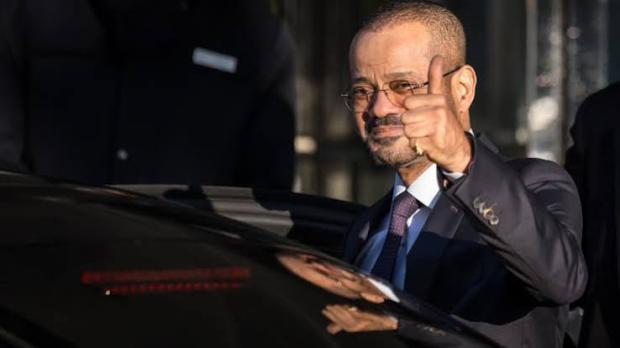
Omani Foreign Minister Badr al-Busaidi has called on the six Gulf countries, Saudi Arabia, Bahrain, Kuwait, Qatar, the UAE, and Oman, as well as Iraq and Iran, to unite under a single "non-aggression" security pact.
Speaking at the UK's Cambridge University on Monday during a diplomatic visit, Busaidi said it was time for the Gulf "to step up and take responsibility for our own security" and end reliance on "external powers".
"The nuclear issue and the Hormuz issue are both impossible to resolve because external powers continue to define the terms of engagement, while regional powers are unable to take collective responsibility for making their own security arrangements and reach a consensus on them," Busaidi said.
"That is why in my talk today I am making a call for us in the Gulf to step up and take responsibility for our own security, and for us to do so inclusively."
His speech came amid a flurry of diplomatic activity surrounding Iran, including senior officials from the Mecca Defence Alliance meeting Iranian leaders in Tehran on Monday.
Iran's top security official, Mohsen Rezaei, said the talks showed that US threats had little impact on regional diplomacy and marked the start of a "real transformation".
Members of the alliance - Saudi Arabia, Turkey, and Pakistan - gathered to negotiate as regional powers strive to end the Israeli-US war against Iran and establish a security framework independent of Washington.
The talks come as the conflict continues to threaten the region and the global economy, amid mounting fears of renewed US-Israeli attacks.
'False perception' of antagonism against Iran
Busaidi said that positioning Iran as the security threat has been "the most damaging of the priorities imposed on the region from the outside".
"This produced an unstable regional system constructed on the entirely false perception that there is a fundamental regional antagonism between Iran and the Arab states of the Gulf," he said.