










Breaking News
 New image sheds light on China's secret spaceplane
 France to Impose 'Riot Tax' on Insurance to Pay for Damage of Islamo-Leftist Unrest
A3Podcast Special Report 30 Oct 26 - Increased Risk
 Microreactor Gets DOE Approval for Full Power Testing, Previously Contracts with Army...
Top Tech News
Microreactor Gets DOE Approval for Full Power Testing, Previously Contracts with Army...
 Ford Fathom: Everything We Know About The Sub-$30,000 Affordable EV Truck
 Love it or loathe it, AI is birthing a golden age of science
 SpaceX has no competition -- Saurav Shroff, Starpath
 Living computers forge a 'hive mind' and work together to outsmart AI
 The Faraday duffle bag: A digital lifeline in a surveillance-saturated world
 Delivery Robots Accused Of Scanning Customers' Faces, Sharing Biometric Data
 Brace Yourselves: Serious Trouble Brewing In The Data Center Industry
 FDA-Approval for Drill-Free Cavity Care May Be Imminent After Great Phase 3 Treatment Trial
 California Startup Says It Has Injected AI-Designed Virus Into Humans For First Time



What Modern Light Bulbs Are Doing to Us
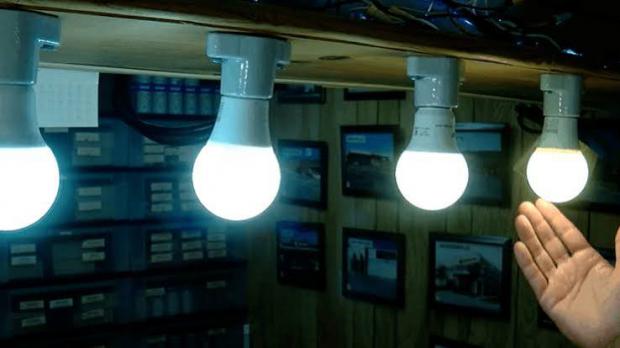
Over the years, I have become convinced sunlight is one of the most essential nutrients for the body. Unfortunately, since no one has a financial interest in promoting sunlight (and it hence has no lobbyists), almost everything we hear instead focuses on why it's terrible for us. For example, dermatology transformed itself from one of the least desirable specialties in medicine into one of the highest paying ones by rebranding its members as cancer fighters, which required scaring everyone senseless about the sun (while omitting that a lack of sunlight is what causes fatal skin cancers). Despite the billions now spent each year on skin cancer, the total death rate from it remains almost entirely unchanged (all of which is discussed here).
A similar story has played out with the light inside our homes. In 2022, the federal government effectively banned the incandescent bulb on the grounds most of its output is "wasted" as infrared, even though a rapidly growing body of research shows our bodies depend upon that infrared. For this reason, I feel it is prudent to explore why this seemingly simple switch could be so impactful on our lives.
Note: after I originally explored this subject, many readers here shared that they greatly dislike how fluorescent and LED lighting feels to be around.
The Importance of Sunlight
Prior to dermatology's war on the sun (which is immensely misguided as dangerous skin cancers are due to a lack of sunlight exposure), the value of sunlight was widely recognized in medicine. For example, in the early 1900s, heliotherapy (sunbathing) was used with great success for treating many otherwise incurable conditions such as the 1918 influenza1 and tuberculosis.1 The existing data in turn shows sunlight provides an immense degree of benefit:
•A large study found high solar UVB exposure halved one's risk of breast and prostate cancer.1
•A 20-year study of 29,518 women found that avoiding the sun made one 60% more likely to die, with the greatest benefit of regular sun exposure being a reduced risk of dying from heart disease.1 Likewise, in a 2024 analysis of the UK Biobank, both measures of UV exposure that were examined were associated with a lower risk of dying from any cause, from cardiovascular disease and from cancer,1 and when 88,905 participants wore light sensors for a week, those with brighter days and those with darker nights were each less likely to die over the following 8 years.1