










Breaking News
 Trump Seems on the Verge of His Last Fatal Mistake. "Netanyahu Insistence." "Trump Re
 Coming Collapse of Saudi Arabia--and What It Means for the Dollar
 Europe's Humiliating Decline as China and Russia Reshape the World Order
 The Imperial Propagandists Are Exposing Themselves Like Never Before
Top Tech News
 Extraterrestrial habitats may rise via Legos of laser-fused moon dust
 Battery-only 19-seater puts China in the electric airliner race
 Dream Chaser space plane gets landing approval for debut mission in 2027
 SpaceX Just Caught Starship on Its FIRST Attempt!
 Solid-State Cells Can Make The U.S. Competitive In Batteries Again: CEO
 Jetson ONE personal eVTOL pod is about to go full sky patrol
 America's INSANE BREAKTHROUGH Could Replace Septic Tanks Forever
 Amazing DIY Building Material for Home & Yard - Inexpensive and Easy!
 Researchers have discovered a massive deposit of hidden water...
 Amazon's Ring Unveils Flying Drone And Robot To Patrol Homes And Businesses



Coming Collapse of Saudi Arabia--and What It Means for the Dollar
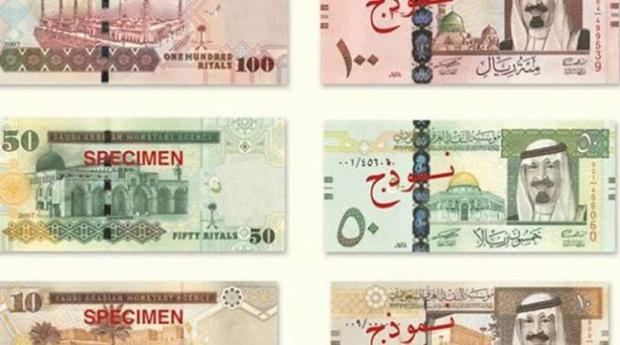
But beneath the surface, the ruling monarchy faces political, religious, demographic, and economic pressures. How vulnerable is the Saudi regime?
Doug Casey: "Appear" is the key word in your question. It's easy to forget that the Saudis were just one family of many wandering around in the desert. Due to their close relations with the British (Lawrence of Arabia, et al.) during and after World War I, they took control of the country. It's unusual that a country is named after a family.
Since its people share the same language, religion, race, and culture, Saudi Arabia is much less of an artificial construct than other countries in Africa and Western Asia. But they were almost all arbitrarily assembled in the boardrooms of Europe, and are naturally unstable. WW1 and 2 each upset the existing balance, redrawing borders and replacing regimes. WW3 will do the same, except even more radically.
I've been to over 150 countries but, regrettably, Saudi Arabia and Yemen aren't among them. I doubt that's going to change because Westerners in general, and Americans in particular, are no longer very welcome in that part of the world. It's funny how your government dropping bombs on the natives can change their attitudes towards you.
Still, looking at Saudi as an exo-geographer, it's easy to see that the place is an accident waiting to happen. Numerous other clans and tribes within the country resent the ruling Saudis, whose 5000 princes and attached minions basically get to steal and allocate the oil money. It's clear that the populace despises their dissipated and corrupt rulers.
MBS, the Crown Prince, has attempted to reform the country by liberalizing the economy and dialing back Wahhabi religious extremism. But as I explained here, his investments have been uniformly disastrous, frittering away scores of billions on grandiose and uneconomic projects. The current war with Yemen could be the catalyst that brings down the whole rotten structure.
MBS and the rest of the ruling coterie should make sure that their jets are fueled for a quick getaway.
International Man: Yemen's Houthis have demonstrated their ability to strike Saudi oil facilities, airports, and other critical infrastructure with missiles and drones. They also threaten shipping through the Red Sea. Could the Houthis, perhaps with Iranian support, destabilize Saudi Arabia to the point of bringing down the monarchy?
Doug Casey: Yemen is one of the poorest, most primitive countries in the world. The Houthis (aka Ansarallah) are a rebel group which controls the western part of the country and is looking to conquer Yemen's official government. The current war between the Houthis and the Saudis is a perfect example of asymmetrical warfare. The Saudis have spent hundreds of billions of dollars buying high-tech weapons from the Americans, and it turns out that they're essentially useless against sandal-clad, AK-47-wielding tribesmen. Weapons are not what wins wars. As Napoleon said, in warfare, the moral is to the physical as three is to one.