










Breaking News
 Trump Seems on the Verge of His Last Fatal Mistake. "Netanyahu Insistence." "Trump Re
 Coming Collapse of Saudi Arabia--and What It Means for the Dollar
 Europe's Humiliating Decline as China and Russia Reshape the World Order
 The Imperial Propagandists Are Exposing Themselves Like Never Before
Top Tech News
 Extraterrestrial habitats may rise via Legos of laser-fused moon dust
 Battery-only 19-seater puts China in the electric airliner race
 Dream Chaser space plane gets landing approval for debut mission in 2027
 SpaceX Just Caught Starship on Its FIRST Attempt!
 Solid-State Cells Can Make The U.S. Competitive In Batteries Again: CEO
 Jetson ONE personal eVTOL pod is about to go full sky patrol
 America's INSANE BREAKTHROUGH Could Replace Septic Tanks Forever
 Amazing DIY Building Material for Home & Yard - Inexpensive and Easy!
 Researchers have discovered a massive deposit of hidden water...
 Amazon's Ring Unveils Flying Drone And Robot To Patrol Homes And Businesses



Europe's Humiliating Decline as China and Russia Reshape the World Order
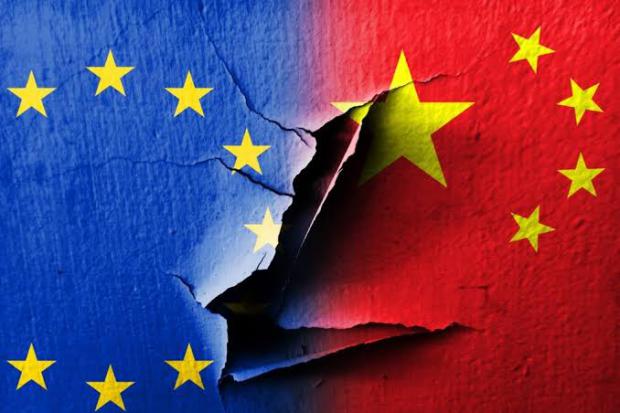
Speaking at the APEC summit in Shenzhen, Putin referred to the Western powers as "former hegemons," a remarkable description of nations that once dictated the terms of international commerce. Europe spent decades believing its economic influence was permanent. Now China and Russia are strengthening their strategic relationship while European leaders struggle with industrial decline, expensive energy, mounting debt, and a war in Ukraine that has drained their resources.
Putin stated, "Experience has shown that the traditional tools of economic dominance and de facto coercion have largely run their course, having lost much of their intimidating power." He continued by arguing that sanctions, tariffs, and export restrictions cannot halt the development of competing economies. His remarks were directed squarely at the West, particularly Europe, which has attempted to isolate Russia economically since the invasion of Ukraine in 2022. Yet Russia continues trading with China, India, and other nations, while European industry has been forced to adjust to the loss of affordable Russian energy.
The irony is extraordinary. Germany built its industrial competitiveness upon reliable energy supplies, advanced manufacturing, and access to international markets. Its politicians then severed much of the economic relationship with Russia while expecting German industry to absorb the consequences. Putin specifically blamed Europe's decision to abandon Russian energy for declining living standards. A survey of 265 companies belonging to the German-Russian Chamber of Commerce found that 65% supported restoring Russian gas supplies immediately, with another 31% favoring their return after the war. The chamber estimated that renewed Nord Stream deliveries could save Germany approximately €9.5 billion annually. Those figures expose the enormous difference between the political ambitions of Brussels and the economic requirements of European industry.
China has approached this geopolitical realignment from an entirely different perspective. Xi declared that Beijing and Moscow should "lead and advance the trend towards a multipolar world." China has become Russia's largest trading partner, securing access to energy and raw materials while expanding markets for its manufactured goods. Russia gains an alternative destination for exports that previously flowed toward Europe. This relationship is not without tensions, and China has no intention of sacrificing its own economic interests merely to accommodate Moscow. Nevertheless, both countries recognize the advantages of cooperating against Western economic pressure.
The underlying issue is capital flows. When governments weaponize trade and financial infrastructure, businesses begin searching for alternative markets, payment systems, and investment destinations. Freezing Russian reserves and restricting access to Western banking networks demonstrated that international financial relationships could be subordinated to political objectives. Other nations took notice. China has expanded the international use of the yuan, while Russia has developed alternative commercial arrangements to reduce its dependence upon Western institutions. These developments do not mean the dollar will suddenly lose its reserve status. They demonstrate how political decisions can accelerate the movement of capital away from established financial centers.