










Breaking News
 Trump Seems on the Verge of His Last Fatal Mistake. "Netanyahu Insistence." "Trump Re
 Coming Collapse of Saudi Arabia--and What It Means for the Dollar
 Europe's Humiliating Decline as China and Russia Reshape the World Order
 The Imperial Propagandists Are Exposing Themselves Like Never Before
Top Tech News
 Extraterrestrial habitats may rise via Legos of laser-fused moon dust
 Battery-only 19-seater puts China in the electric airliner race
 Dream Chaser space plane gets landing approval for debut mission in 2027
 SpaceX Just Caught Starship on Its FIRST Attempt!
 Solid-State Cells Can Make The U.S. Competitive In Batteries Again: CEO
 Jetson ONE personal eVTOL pod is about to go full sky patrol
 America's INSANE BREAKTHROUGH Could Replace Septic Tanks Forever
 Amazing DIY Building Material for Home & Yard - Inexpensive and Easy!
 Researchers have discovered a massive deposit of hidden water...
 Amazon's Ring Unveils Flying Drone And Robot To Patrol Homes And Businesses



Why Mold Illness Goes Unrecognized
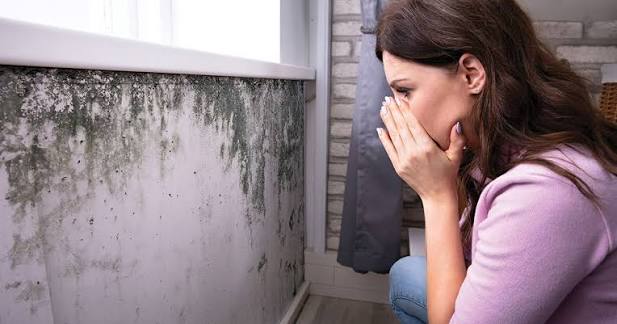
On September 18, Robert F. Kennedy Jr. hosted a Mold Surveillance Roundtable at HHS with the CDC's director, researchers, clinicians and patients1 where he shared that his family's 1920s farmhouse in Bedford, New York flooded in 2003 while they were on vacation and became overrun with black mold.1 Almost all of his children were affected, his wife was badly affected in ways her doctors could not understand, and the house was eventually torn down.1
Kennedy's story is by no means unique to his family, and within the integrative medical field, it is extremely common to encounter individuals who have spent years going from doctor to doctor with fatigue, brain fog, pain, chronic sinus issues, perplexing neurological issues and a growing sensitivity to foods, chemicals and medications, only to be told their labs are normal and leave without a diagnosis.
Mold patients hence face the same struggles other patients with complex illnesses have as:
• Many of the symptoms appear so peculiar and inexplicable, physicians will frequently ascribe them to a catch-all condition (e.g., chronic fatigue syndrome) or psychiatric disorders.
• Many other complex disorders medicine struggles with have overlapping symptoms with mold toxicity (leading to the condition being over-diagnosed or under-diagnosed depending on the practitioner)—which is further compounded by the fact mold patients often also have another debilitating complex illness.
• The exact mix of symptoms each patient presents with varies, so even when physicians are aware of the possibility of this disorder, without a large volume of patients that makes the broader pattern visible, it can be challenging for them to spot it without a history that specifically explores this question.
All of this helps to explain why Kennedy's call for more physician education, better diagnostics, and new treatments for mold illness (along with research into why it is so frequently unrecognized) was so significant, as up until now, HHS had only acknowledged mold's effects on the lungs,1 while patients with the broader illness were told the evidence did not support their condition,1 and physicians were warned against the tests used to diagnose them.1
Mold patients also fall into a group I have long felt medicine fails the most: those who are more sensitive than the average person. Our medical system is built around the statistical average, so when a subset of patients reacts to something the majority tolerates (e.g., a medication, a vaccine or a building), rather than recognizing that sensitivity varies, the system typically concludes the reaction cannot be real (which I discussed further here). In the case of mold, this is compounded by the fact that the people around a mold patient (e.g., their family or coworkers) frequently feel fine in the same building, so the patient is often dismissed by the very people they are relying on for help, and many in turn come to wonder if they are simply losing their minds.