










Breaking News
 France to Impose 'Riot Tax' on Insurance to Pay for Damage of Islamo-Leftist Unrest
 Microreactor Gets DOE Approval for Full Power Testing, Previously Contracts with Army...
 Patrick Stewart Has Died – Captain Picard, Professor X
 Binance Hacked for $5.8B, Binance Says User Funds Are Safe
Top Tech News
 California Startup Says It Has Injected AI-Designed Virus Into Humans For First Time
 How I heat and cool my shop...Wood, Propane and Cozeware mini split powered by the sun.
 AI as a tool of Empowerment! I've built a local system and You Can Too!
 Ancient Builders Moved Stones We Still Struggle to Explain
 Startup Unveils "Big Iron" Rocket Whose Upper Stage Is An Orbital Data Center
 The NYPD's New Cell Tracker Is Built For Mobility
 Electronic skin instantly displays touch as light
 $10k EV hatch packs in 5-minute flash charging
 Apex Recordhunter electric drone sets unofficial speed record
 Advanced Small Modular Reactors (SMRs)



Blockbuster! PETM Study shows fish boomed when CO? was five times higher and Earth was...
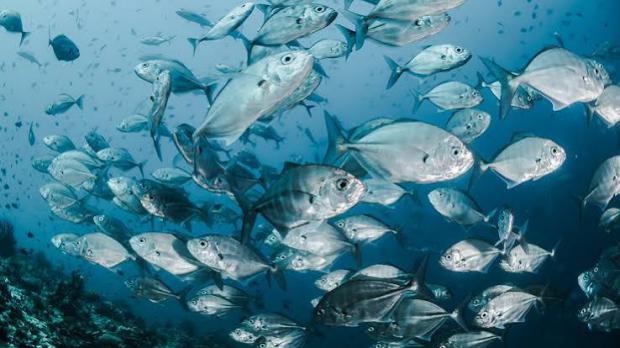
Unlike the advertising, ocean life thrives with extremely high CO2 and very warm water
The hottest time since the dinosaurs died out has been held up as the posterchild of a carbon disaster, but it turns out that despite CO2 reaching a shocking 2,000 ppm or more plus temperatures being so high, fish life boomed. All the panic about carbon dioxide ruining the ocean and acidification killing off the fish isn't borne out by the data.
That doesn't mean every fish species was happy about this rather wild kind of climate change, but it wasn't the catastrophe we've been sold.
The PETM (Paleocene-Eocene Thermal Maximum) has been the choice pick of ancient disasters to warn us of the dangers of carbon dioxide. It occurred 56 million years ago, when volcanoes are estimated to have unleashed between 3,000 and 10,000 billion tons of carbon into the atmosphere. Global warming rose by 5–8°C and tropical fish swam near the poles. The warming lasted about 100,000 years. Just a blip, really, but long enough to wipe out plenty of fish if it was dangerous.
Currently humans are putting out about 40 billion tons of CO2 each year. So the volcanoes unleashed three hundred to nine hundred times as much carbon. *
Make no mistake, these researchers were tracking layers of fish teeth and scales that pile up on the ocean floor. They also looked at barium sulphate, which tells us how much carbon was being "exported" from the surface to the bottom of the ocean from all kinds of life, like phytoplankton. The message is that the entire marine food-production system may have become more productive. This runs totally counter to the catastrophe the IPCC is marketing.
This study took samples from six different sites spread across the world. Scientists had assumed that in a warmer world the ocean would stratify more — and separate into layers determined by density. That would suppress productivity because it would stop the mixing of heat, carbon and oxygen with nutrients upwelling from the deep. Now it appears that in a warmer world enough nutrients might be coming from above, from weathering off the land, to compensate for any lost from below. The gloomy predictions missed a potentially powerful counteracting effect?
Fascinatingly, as blockbuster as this paper seems to be, this exact effect was reported in 2021 by Britten and Sibert. And that paper evidently disappeared like a stone, despite being presented at an AGU Conference. So many experts have known for years that carbon and warmer temperatures seem to good for marine life, yet they didn't feel they could speak up, and the media mentioned the results once in a dark corner somewhere and no one got excited. So Zhou et al have presumably repeated and expanded on the earlier work, and now that we are more confident of it, it will …also disappear like a stone.
Perhaps we can change that?