










Breaking News
 Hakeem Jeffries Claims Impeachment And Getting Even With Trump Aren't Priorities
 Iran Proves Willingess To Re-Engage In Nuclear Talks, Despite Public Stance: NYT
 Life After AI: Where The Money Is Now Moving
 Paraguay's President Resigns Amid Ueno Bank Crisis, Millions Of Depositors In The Streets
Top Tech News
 Prism puts an eye-controlled Linux computer on your face
 Remember Yesterday: AI For Today and Tomorrow
 Robot Mowers Invade America's Golf Courses, Putting Groundskeepers On Notice
 Monstrous 13-foot mecha craves the dangerous jobs humans avoid
 Scentronic tech lets you smell the internet
 Virgin Galactic's new rocket plane revives its bid for a space airline
 The metal kept moving east while the sellers ran, and Ronnie called the flush a week early
 Chinese Company Develops $1,000 AI-Powered Laser System To Kill Mosquitoes
 PRP vs Exosomes vs Stem Cells: Which Fits Your Condition?
 SHOCKING: The Secret (Frantzve) Family Business



Paraguay's President Resigns Amid Ueno Bank Crisis, Millions Of Depositors In The Streets
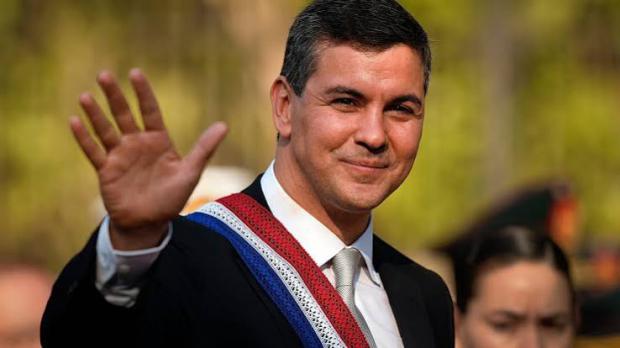
The turmoil marks a tectonic shift within the Colorado Party, which propelled Peña to power in 2023. Divided into rival factions, the party has dominated Paraguayan politics for most of the past seven decades.
Congress kicked off discussions to impeach the president Thursday morning, when Horacio Cartes, the powerful former president and leader of the ruling Colorado Party, which holds a majority in congress, publicly backed his ouster.
Paraguay's central bank seized Ueno Bank on Tuesday, locking an estimated 3 million customers out of their money and setting off street protests and an impeachment bid against President Santiago Peña. The central bank's board voted unanimously late Monday to put the digital lender into "resolution," the regulator announced, after Ueno's solvency ratio fell below half the legal minimum. Customers could not withdraw or transfer a guaraní.
Ueno says its customers number about 3 million, roughly 60% of Paraguay's adult population, though Paraguayan press counts put the number of account holders nearer 1.7 million. It was also holding between $800 million and $850 million in public money, including about $380 million from the state pension and health fund, known as IPS. The central bank's own criminal complaint alleges that Ueno made large unsecured loans to companies inside its own corporate group and used new borrowing to cover repeated overdrafts, and describes an allegedly simulated $74.4 million sale of loans meant to hide that exposure, according to Diario HOY.
The political problem is that Peña was a business partner of Ueno's owners until March 2025. The bank belongs to Grupo Vázquez, and Peña held shares in its holding company until an extraordinary shareholders' assembly cancelled his stake that month. He said in April 2025 that he was never a shareholder or investor in the bank itself, and Ueno says the same. He also appointed Carlos Carvallo to run the central bank in 2023, after Carvallo had chaired Ueno's predecessor, Financiera Ueno, until mid-2023. The central bank says Carvallo recused himself from every Ueno decision.
The warnings were not hidden. In June the central bank told Ueno it was lending too much to companies tied to its owners. In September the regulator opened an administrative investigation, and senators from Peña's own Colorado Party and the opposition began demanding that he replace the bank's leadership. On Oct. 29, the same day a central bank board member, economist Carmen Marín, resigned, Ueno announced a $100 million capital plan. Fitch had already moved its outlook on the bank to negative. Peña, for his part, repeatedly dismissed concerns about Ueno's finances and accused the media of fearmongering.
Once the bank went under, the central bank's own president became the first casualty. Peña said he asked Carvallo to resign. Carvallo said he had signed his resignation but would stay to oversee the takeover, because "the central bank needs calm to do its job." Peña has nominated Raúl Vera Bogado to replace him, subject to congressional approval.