










Breaking News
 BRICS Rising: Reimagining Global Geopolitics and the Emerging Multipolar World Order
 REPORT: WWE Icon Emerges as Favorite to Replace Tennessee's Marsha Blackburn in U.S. Senate
 No Margin for Error: Victor Davis Hanson's Dire Warning About the Next Two Years...
 MIKE LINDELL TEASES BOMBSHELL MIDTERM ELECTION FINDINGS!
Top Tech News
 Prism puts an eye-controlled Linux computer on your face
 Remember Yesterday: AI For Today and Tomorrow
 Robot Mowers Invade America's Golf Courses, Putting Groundskeepers On Notice
 Monstrous 13-foot mecha craves the dangerous jobs humans avoid
 Scentronic tech lets you smell the internet
 Virgin Galactic's new rocket plane revives its bid for a space airline
 The metal kept moving east while the sellers ran, and Ronnie called the flush a week early
 Chinese Company Develops $1,000 AI-Powered Laser System To Kill Mosquitoes
 PRP vs Exosomes vs Stem Cells: Which Fits Your Condition?
 SHOCKING: The Secret (Frantzve) Family Business



BRICS Rising: Reimagining Global Geopolitics and the Emerging Multipolar World Order
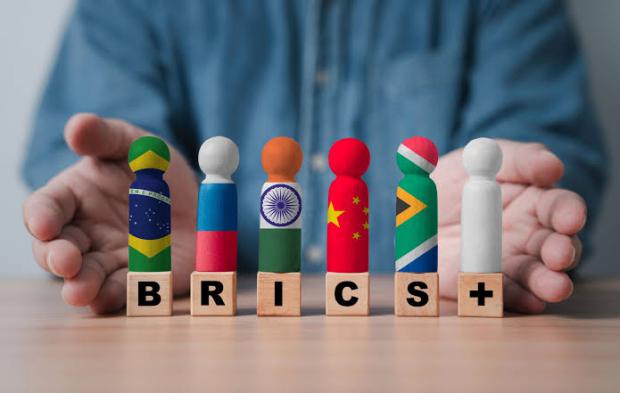
From an Investment Acronym to a Geopolitical Institution
The story of BRICS began not in a foreign ministry but in the world of international finance. In 2001, Goldman Sachs economist Jim O'Neill coined the term "BRIC" to describe Brazil, Russia, India and China as large emerging economies whose collective economic importance was expected to increase dramatically in the twenty-first century. At the time, BRIC was essentially an analytical category rather than a political organization. Yet the four countries gradually recognized that their rising economic weight could provide the foundation for diplomatic coordination. The first formal BRIC foreign ministers' meeting took place in 2006, while the first leaders' summit was held in Yekaterinburg, Russia, in 2009. South Africa subsequently joined, transforming BRIC into BRICS and giving the grouping a distinctly transcontinental character connecting Latin America, Eurasia, South Asia and Africa. The transformation was important because the organization began to move beyond the narrow logic of economic growth. BRICS increasingly became a forum for discussing international financial governance, development, trade, security, climate change and reform of institutions such as the United Nations, International Monetary Fund and World Bank. The grouping's evolution demonstrated an important historical phenomenon: rising economic power eventually generates demands for political representation.
The global financial crisis of 2008–09 accelerated this evolution. The crisis severely damaged confidence in the assumption that Western financial institutions were inherently superior custodians of global economic stability. Emerging economies, which had accumulated substantial foreign-exchange reserves and increasingly accounted for a large share of global economic growth, began questioning why decision-making power in the IMF, World Bank and other institutions remained disproportionately concentrated in the hands of advanced Western economies. BRICS thus emerged from a structural contradiction at the heart of globalization: economic power was becoming geographically dispersed while institutional power remained comparatively concentrated. Its demand was not initially for the destruction of the existing international system but for its democratization. This distinction remains essential even today. BRICS has consistently described its objective in terms of reforming multilateral institutions rather than abolishing multilateralism. The New Delhi Declaration once again emphasized sovereign equality, inclusiveness, consensus and the construction of a more representative international order (Government of India, 2026).