










Breaking News
 Americans Are Officially Out Of Money To Spend -- We Had To React
 Arizona reports several cyclosporiasis cases: What to know | FOX 10 Phoenix
 South Korea's AI Bubble Just Popped
 It's Not Just a New Jersey Scandal – SIX States Were Previously Caught Including THOUSANDS...
Top Tech News
 Anthropic is launching its own drug discovery programs for rare diseases using Claude...
 SpaceX AI Satellites Will Have 250 Kilowatts of Power
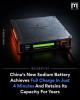 Chinese researchers have developed a sodium-metal battery that can fully charge in just 4 minutes...
 SpaceX Starship Flight 13 in 3 Days - Thursday July 13
 Chinese Scientists Develop Nuclear Battery Using Carbon-14
 Teleoperated humanoid robots complete first-ever live surgery
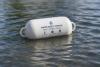 Floating capsule auto-disinfects water without chemicals or battery
 Modular Reactors To Solve Data Center Hysteria?
 DeepSeek Developing In-House AI Chip In Bid To Cut Nvidia Reliance
 America just took three brand-new nuclear reactors critical in thirty days, a first for any...



Hyperloop: How the 760mph train will levitate above a magnetic track
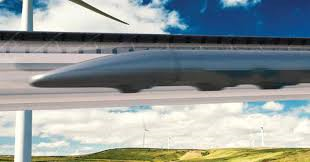
The train will use a technology called passive magnetic levitation which its creators claim is more efficient and safer than the levitation system used by Maglev trains in Japan.
Where Maglev trains require many power stations to be installed along the side of the track, each feeding electricity to copper cables in the track, which become an electromagnet once charged, the Hyperloop system has a passive magnet on each train carriage and an aluminium track containing loops of wire. This setup is more like a pair of regular magnets, rather than an electromagnet which requires a constant supply of electricity to work.
Bibop Gresta, chief operations officer of Hyperloop Transport Technologies (HTT), explained how this system is better than Meglev. "Utilising a passive levitation system will eliminate the need for power stations along the Hyperloop track, which makes this system the most suitable for the application and will keep construction costs low."