










Breaking News
 This is the future we shall bring into being
 Elon Musk's Vision For The Future Looks Like A Movie
 Phosphorus Munitions Fired by Israel Burn Groves, Orchards in Southern Lebanon
 Iran's IRGC Warns It Will Expand 'Geography of the War' If the US Attacks Again
Top Tech News
 BEYOND THE MOON: NASA plans a nuclear-powered fleet to push DEEPER into space
 Big Oil Backs Mazama's $135 Million Bet On Superhot Geothermal
 Quantum compass takes flight on Northrop's Lumberjack drone
 Terrifying AI Behavior Even Its Creators Couldn't Explain
 WW3 Near-Miss? AI Hallucinated Nuclear Weapons Components Aboard Chinese Vessel Bound For Iran
 Stripe Is Building the Toll Road for the Machine Economy
 Toyota Dakar hopeful swaps twin-turbo V6 for hydrogen fuel cells
 4-min turbo-inflatable cubic camp castle is now available in the USA
 Researchers Used Claude To Hack OpenAI Employee Accounts
 Chinese Scientists Develop New Oil Refining Method That Cuts Energy Use by 90%



Hypersonic Flight Is Coming: Will the US Lead the Way?
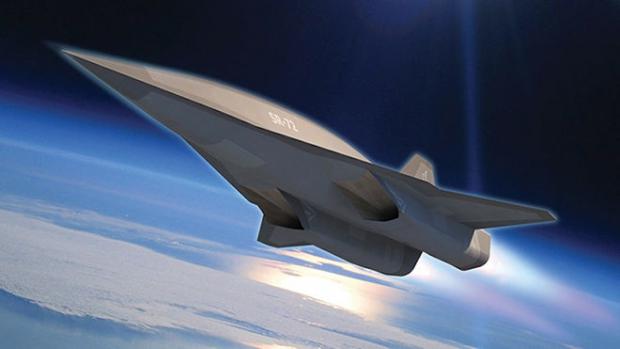
"What's exciting about aerospace today is that we are in a point here where suddenly, things are happening all across the board in areas that just haven't been happening for quite a while," said former U.S. Air Force Maj. Gen. Curtis M. Bedke.
"There was a period where engine technology had just sort of stagnated — a point where all materials technology was going along at about the same pace," Bedke added. "There just wasn't much happening. But suddenly, in all sorts of areas that apply to aerospace, things are happening."
Bedke was one of five panelists to speak Oct. 27 at the Forum on American Aeronautics here at the Mojave Air and Space Port. Sponsored by the House Committee on Science, Space, and Technology, the forum was hosted by committee chairman Lamar Smith, R-Texas, and member Steve Knight, R-Calif. Bedke, Smith and Knight were joined by David McBride, director of NASA's Armstrong Flight Research Center in California, and Craig Johnson, director of business strategy and development for Lockheed Martin's Skunk Works. Former Mojave Air and Space Port CEO Stu Witt moderated.