










Breaking News
 America at 250: How Liberty, Property Rights & Limited Government Built the Freest Nation in History
 Supreme Court Rules "No Right to Grow Food" -- Door Wide Open for Small Farm Closures!
 Addition of electricity drastically lowers carbon footprint of cement production
 Culture Shift
Top Tech News
 Cars Are Fast Becoming Dystopian Prison Pods...
 Our Emergency Water Plan Wasn't Good Enough - So We Built This
 Sodium Ion Batteries Can Reach 100 Gigawatt Per Hour Per Year Scale in 2027
 Juiced Bikes proves capable electric motorcycles don't have to cost a lot
 Headlight projectors turn your car into a drive-in theater
 US To Develop Small Modular Nuclear Reactors For Commercial Shipping
 New York Mandates Kill Switch and Surveillance Software in Your 3D Printer ...
 Cameco Sees As Many As 20 AP1000 Nuclear Reactors On The Horizon
 His grandparents had heart disease.
At 11, Laurent Simons decided he wanted to fight aging.
His grandparents had heart disease.
At 11, Laurent Simons decided he wanted to fight aging.
 Mayo Clinic's AI Can Detect Pancreatic Cancer up to 3 Years Before Diagnosis–When Treatment...



New App Aims To Be The "Shazam" For Plants By Identifying Species With Just A Photo
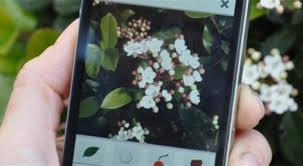
While it may not theoretically be a new app, PlantNet has just recently garnered attention as a result of successful updates that have exponentially increased its downloads. It was released last summer and has continuously improved its database to be more inclusive and accurate to help users.
PlantNet is an app that can identify the plant you're looking at based on a photo you take of it, making it the "Shazam" for plants. While image-matching is extremely difficult, considerably more than audio-matching like Shazam does, it's made easier when it's at least just limited to one, albeit immense, category: plants.
The app is meant to help identify wild plants for those that are out and about and find themselves wondering what species they're looking at, but it's being expanded to include domestic plants. With 6,400 plants in its database so far, the app is increasing its effectiveness and works by matching the picture you snap with the thousands in its database to find the plant you're looking at. Since the app uses your location (if you allow it to), identifying wildflowers is made easier by narrowing down what plant it could be by first narrowing down the region.