










Breaking News
 America at 250: How Liberty, Property Rights & Limited Government Built the Freest Nation in History
 Supreme Court Rules "No Right to Grow Food" -- Door Wide Open for Small Farm Closures!
 Addition of electricity drastically lowers carbon footprint of cement production
 Culture Shift
Top Tech News
 Cars Are Fast Becoming Dystopian Prison Pods...
 Our Emergency Water Plan Wasn't Good Enough - So We Built This
 Sodium Ion Batteries Can Reach 100 Gigawatt Per Hour Per Year Scale in 2027
 Juiced Bikes proves capable electric motorcycles don't have to cost a lot
 Headlight projectors turn your car into a drive-in theater
 US To Develop Small Modular Nuclear Reactors For Commercial Shipping
 New York Mandates Kill Switch and Surveillance Software in Your 3D Printer ...
 Cameco Sees As Many As 20 AP1000 Nuclear Reactors On The Horizon
 His grandparents had heart disease.
At 11, Laurent Simons decided he wanted to fight aging.
His grandparents had heart disease.
At 11, Laurent Simons decided he wanted to fight aging.
 Mayo Clinic's AI Can Detect Pancreatic Cancer up to 3 Years Before Diagnosis–When Treatment...



Addition of electricity drastically lowers carbon footprint of cement production
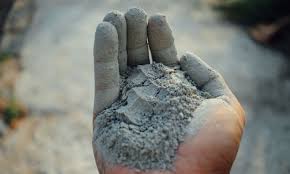
However, its manufacturing process has also made it a wrecking ball on the environment, with a carbon footprint that rivals that of the aviation industry. Scientists from the University of British Columbia have devised a method that dramatically cuts cement's carbon footprint using electricity.
Their process, outlined in ACS Energy Letters, significantly lowers the extreme heating requirements of cement manufacturing by incorporating a preheating electrochemical conversion step. Their approach also utilizes recycled cement and concrete to achieve an even lower carbon footprint.
Cement is one of the world's most widely used industrial materials. Humanity produces roughly 4 billion tons of it every year, mixing the fine powder with water, sand, and aggregates like gravel to create concrete and mortar used in buildings, bridges, roads, tunnels, dams, and countless other forms of infrastructure. In fact, much of modern civilization is quite literally built on it.
Cement's ubiquity stems from the remarkable durability and compressive strength it provides to structures, allowing them to last for decades or even centuries. Unfortunately, the material also sits at the center of one of the planet's biggest industrial climate problems. Cement production is estimated to account for roughly 8% of global CO? emissions, more than the entire aviation industry.
The bulk of the problem lies not with the finished cement itself but with its manufacturing process.
Modern cement production begins primarily with limestone (calcium carbonate, CaCO?) and silica-rich minerals such as clay or sand. These raw materials are fed into giant rotary kilns and heated to temperatures approaching 2600 °F (1450 °C), partially melting and chemically transforming the mixture into hardened nodules known as clinker: the intermediate material later ground into the fine powder we recognize as cement. Clinker consists predominantly of calcium silicate minerals known as alite and belite, compounds largely responsible for cement's strength and hardening behavior.
Now, this process has a two-fold problem that generates emissions in two separate ways.
First, maintaining kiln temperatures hot enough to partially melt rock requires enormous amounts of energy, traditionally supplied by burning coal, petroleum coke, or natural gas. Cement kilns are among the most energy-intensive industrial systems on Earth.