










Breaking News
 Amazon Boeing Plane Bursts Into Flames After it Overshoots Runway at Miami International Airpot
 Trump grants clemency to 30 people, White House pardon czar says
 Bessent: "CUT THE SNAKE'S HEAD OFF"--But Who is the Real Target?
 Special LIVE Saturday Show: Could The Gov Seize XRP After Chilling FDIC Admission? Gas Prices...
Top Tech News
 Floating data center would provide water and electricity to 32,000 homes
 OpenAI Cuts Off Elon's Cursor, Humanity's First Star Probe, and Trump's Nuclear Mars Shi
 Eating pollution? Plastic-to-cookie technology raises safety, environmental concerns
 Ford's $30,000 Fathom EV Truck Appears More Conventional Than Expected
 Berlin-based artist Simon Weckert explored that idea with Digital Camouflage...
 Tether expands tokenization business into Saudi Arabia, starting with real estate
 Ukraine is facing a new problem in its war with Russia:
 It charges more than it discharges while driving
 Dataminr AI tech to go live on NATO Maven system: CEO
  The Most Dangerous Interview Ever Recorded? PART 2


Toyota's Still Serious About Hydrogen--It Built a Semi to Prove It
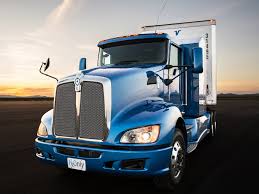
For a while there, the hydrogen fuel cell was the darling of the transportation industry. It would provide the zero emission propulsion of a battery-powered car, the refueling time of a gas-powered car, producing nada but drinkable H20 as a byproduct. But there's a reason that, despite 50 years of work on fuel cells, the tech has never caught on. There's been no incentive to build hydrogen fueling infrastructure, so there's nowhere to top up your tank, and although hydrogen is the most abundant element in the universe, converting it to liquid fuel is energy intensive.
But Toyota isn't just holding onto hydrogen hope, it's expanding its efforts past passenger cars, to trucks. On Wednesday, it showed off Project Portal, a shiny blue 18-wheeler prototype powered by a pair of fuel cells. The Japanese automaker believes that by focusing on the right market, it can break the shackles that have restrained the fuel of the future.

UPS Has a Mother-Truck of a Delivery Drone Idea
"This is a proof of concept, and we really want to show that the powertrain works," says Toyota engineer, Tak Yokoo. "It should be capable for all truck operations."
Toyota engineers packed everything the Project Portal truck needs into a blue box the size of a garden shed, tucked between the cab and the trailer: two of the fuel cells you'll find in the Mirai passenger car, a small 12-kWh battery, and enough liquefied hydrogen to haul a laden 80,000-pound truck, 200 miles.
Remember that experiment you did in school science, using electrodes in water to split water into hydrogen and oxygen? The truck's fuel cells do the opposite, combining hydrogen from the tank with oxygen from the air, yielding H2O along with electricity that powers a motor good for 670 horsepower.