










Breaking News
 Amazon Boeing Plane Bursts Into Flames After it Overshoots Runway at Miami International Airpot
 Trump grants clemency to 30 people, White House pardon czar says
 Bessent: "CUT THE SNAKE'S HEAD OFF"--But Who is the Real Target?
 Special LIVE Saturday Show: Could The Gov Seize XRP After Chilling FDIC Admission? Gas Prices...
Top Tech News
 Floating data center would provide water and electricity to 32,000 homes
 OpenAI Cuts Off Elon's Cursor, Humanity's First Star Probe, and Trump's Nuclear Mars Shi
 Eating pollution? Plastic-to-cookie technology raises safety, environmental concerns
 Ford's $30,000 Fathom EV Truck Appears More Conventional Than Expected
 Berlin-based artist Simon Weckert explored that idea with Digital Camouflage...
 Tether expands tokenization business into Saudi Arabia, starting with real estate
 Ukraine is facing a new problem in its war with Russia:
 It charges more than it discharges while driving
 Dataminr AI tech to go live on NATO Maven system: CEO
  The Most Dangerous Interview Ever Recorded? PART 2


Luxembourg's New Law Lets Space Miners Keep Their Plunder
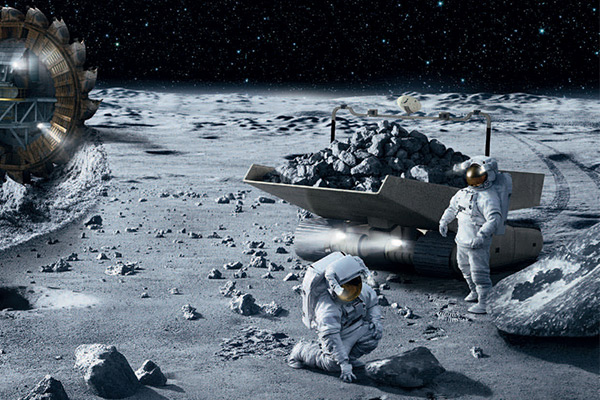
It might have seemed strange for the tiny state's money man to solicit meetings with cosmic researchers, but Luxembourg is always on the lookout for its next big investment. So when the center's director, Pete Worden, began to talk about space mining—extracting water, ore, precious metals, alien time capsules, and whatever else from the likes of asteroids—Schneider listened.
"I thought this was all science fiction," says Schneider. But Worden convinced him there was a whole cosmic economy to build, one that could extend from the moon to Mars. That same year, two guys founded a space prospecting company called Planetary Resources. And in January 2013, another, named Deep Space Industries—headquartered inside NASA's Ames campus—was born. Soon, Schneider saw the same future they did. "The question was not if that all would happen, but when," he says. "And there I saw a huge opportunity for Luxembourg."