










Breaking News
 Amazon Boeing Plane Bursts Into Flames After it Overshoots Runway at Miami International Airpot
 Trump grants clemency to 30 people, White House pardon czar says
 Bessent: "CUT THE SNAKE'S HEAD OFF"--But Who is the Real Target?
 Special LIVE Saturday Show: Could The Gov Seize XRP After Chilling FDIC Admission? Gas Prices...
Top Tech News
 Floating data center would provide water and electricity to 32,000 homes
 OpenAI Cuts Off Elon's Cursor, Humanity's First Star Probe, and Trump's Nuclear Mars Shi
 Eating pollution? Plastic-to-cookie technology raises safety, environmental concerns
 Ford's $30,000 Fathom EV Truck Appears More Conventional Than Expected
 Berlin-based artist Simon Weckert explored that idea with Digital Camouflage...
 Tether expands tokenization business into Saudi Arabia, starting with real estate
 Ukraine is facing a new problem in its war with Russia:
 It charges more than it discharges while driving
 Dataminr AI tech to go live on NATO Maven system: CEO
  The Most Dangerous Interview Ever Recorded? PART 2


Amphibio artificial gills for a flooded future
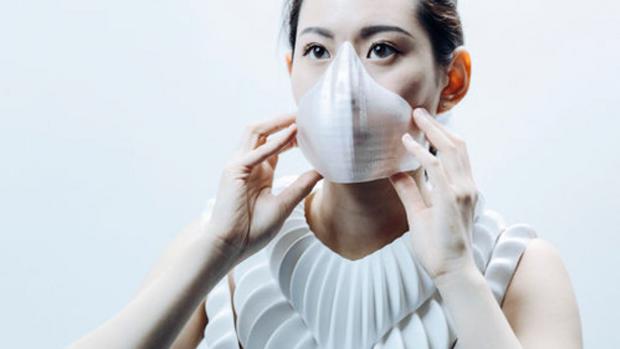
Biomimicry designer and material scientist Jun Kamei at the Royal College of Art's answer is Amphibio – a sort of lightweight 3D-printed vest made out of a polymer that acts as both an artificial gill and a breathing reservoir that will allow people to hang out in the submerged megacities.
Designed in collaboration with the RCA-IIS Tokyo Design Lab, Amphibio is Kamei's solution to a projected future in 2100 when global warming has melted the ice caps and rising oceans have affected 30 percent of the world's population. The intuitive reaction to such a disaster might be to move inland, but Kamei believes that a better idea would be to adopt a semi-aquatic lifestyle using something like the Amphibio artificial gill.
Still in the concept stage, Amphibio is a biomimetic artificial gill that's based on diving spiders and insects that have a superhydrophobic skin surface that allows them to gather a bubble of air around their bodies. These bubbles act like gills that let in oxygen dissolved in the surrounding water and release carbon dioxide.